کانی سنگ امیران
تولید کننده انواع مواد اولیه معدنیکانی سنگ امیران
تولید کننده انواع مواد اولیه معدنیComprehensive review of acoustic properties and specific gravity of industrial white barytes
Comprehensive review of acoustic properties and specific gravity of industrial white barytes
Introduction to Industrial White Barite and Its Mineral Structure
Industrial white barite is one of the most widely used filler minerals in today's advanced industries, attracting the attention of many manufacturers of paints, coatings, and polymeric products due to its unique combination of physical and chemical properties. Chemically known as barium sulfate (BaSO4), this mineral is classified among heavy minerals, and the root of its popularity can be traced to its high specific gravity and exceptional chemical stability.
In nature, barite is found in various colors including white, yellow, brown, and even colorless, but its white variety commands the highest industrial value in applications where the final color of the product matters due to its higher purity and low level of color impurities. The Amiran Mineral Stone Project introduces this product under the name white barite with the aim of being used in paints, coatings, and polymeric products containing mineral fillers.
The crystal structure of barite is orthorhombic, and this structure is considered one of the main reasons for the mineral's high stability and resistance to harsh chemical conditions. In fact, the cohesive crystal structure allows barium sulfate to resist most acids and bases, maintaining its performance in various industrial environments without deformation or decomposition. This feature is particularly important in the paint and coating industries, where products are exposed to moisture, chemicals, and variable weather conditions.
One of the key points in understanding industrial white barite is its fundamental difference from other mineral fillers such as calcium carbonate, talc, or kaolin. While most common fillers have a specific gravity of about 2.7 to 2.8 g/cm³, white barite occupies a completely different position among mineral fillers with a specific gravity ranging from 4.3 to 4.5 g/cm³. It is this striking difference that makes this product a unique option for applications requiring increased mass, sound control, or improved mechanical properties.
From a processing perspective, mined barite is transformed into a uniform powder with a specific particle size distribution after crushing, bleaching, and precise particle classification. At this stage, the level of precision in controlling particle size has a direct impact on the final quality of the product, as the particle size of industrial white barite powder determines its behavior in the formulation of paints, coatings, and polymeric compounds. The 450 to 2500 mesh range considered for this product demonstrates the breadth of its applications, from high-build architectural coatings to delicate paints and advanced polymer composites.
Specific Gravity of White Barite and Its Role in the Formulation of Industrial Products
Specific gravity or density is one of the most important physical characteristics of any mineral, and in the case of industrial white barite, this property is recognized as the product's primary competitive advantage. The specific gravity of pure barite is approximately 4.5 g/cm³, and even its industrial samples typically fall within the range of 4.3 to 4.5 g/cm³, which is nearly twice that of most common mineral fillers.
But why is high specific gravity so important in the paint, coating, and polymer industries? The answer to this question lies in the science of rheology and the physics of coatings. In paint production, one of the main challenges for manufacturers is controlling the rate of settling and sedimentation of fillers during the product's shelf life. Heavier particles like barite have a greater tendency to settle, but at the same time, using very fine particles of white barite with a high surface area can turn this challenge into an opportunity to produce high-quality paints.
In the coating industry, high specific gravity means an increase in coating mass per unit area. This is important in applications such as automotive underbody coatings, architectural paints, and industrial coatings, where the thickness and mass of the coating directly affect the coverage and durability of the product. Additionally, in polymeric products, the addition of white barite as a mineral filler allows engineers to precisely control the density of the final part and adjust its physical properties in accordance with application requirements.
One of the most important applications of barite's high specific gravity is its use in the production of soundproofing and radiation-shielding sheets and panels. In these products, high mass per unit area prevents the passage of sound waves and rays, improving the acoustic performance and safety of the product. This very feature has made barite a staple in the production of advanced acoustic insulation materials and protective coatings.
In the formulation of polymeric products, the specific gravity of white barite also plays a decisive role in adjusting mixing ratios, filler levels, and production process design. Polymer engineers must carefully adjust formulation ratios when replacing lighter fillers with white barite so that, while benefiting from the advantages of high density, problems such as excessive viscosity increase or production line speed reduction are avoided. A thorough understanding of these concepts greatly aids the optimal use of industrial white barite.
Another point worthy of reflection is the direct relationship between specific gravity and filler behavior in mixing processes. Heavier particles require stronger agitation systems and longer mixing times to achieve a uniform dispersion within the matrix. Manufacturers who take these technical points into account can offer much higher quality final products.
Acoustic Properties of White Barite: Mechanisms of Sound Transmission Control and Reduction
One of the most fascinating and yet lesser-known aspects of industrial white barite is the impact of this mineral on the acoustic properties of the products in which it is used. To understand this, one must first become familiar with the basic principles of sound science and the behavior of sound waves in materials, because barite's sound control mechanism is completely different from what occurs in conventional sound-absorbing materials like foams and mineral wools.
When sound waves strike a surface, they reflect part of their energy, absorb some, and transmit another portion through the surface. Light and porous materials like foam absorb sound through internal friction and the conversion of sound energy into heat. However, in heavy and dense materials such as compounds containing white barite, the dominant mechanism is the reduction of sound transmission, technically known as Transmission Loss. According to the mass law in acoustics, the amount of sound transmission loss is directly related to the increase in surface mass; meaning that the heavier the surface, the less sound passes through it.
The very high specific gravity of white barite makes it an effective agent for increasing the mass of polymeric compounds and coatings. When the particles of this mineral are uniformly dispersed within the polymer matrix, the density of the final material increases, and sound waves suffer energy loss as they pass through different layers. In addition to the mass effect, the acoustic impedance mismatch between the barite particles and the polymer matrix causes internal scattering and reflection of sound waves, which also contributes to the reduction of sound transmission.
In practical applications, these acoustic properties are utilized in a diverse range of products: architectural acoustic insulation panels, industrial flooring, automotive anti-vibration coatings, and high-noise fluid transport pipes can all benefit from the advantages of using white barite. In fact, in many of these products, barite has replaced lighter fillers such as calcium carbonate, delivering better acoustic performance without the need to increase thickness.
The important point is that the acoustic efficacy of white barite depends on factors such as particle size distribution, loading level in the formulation, and the quality of dispersion within the matrix. Very fine particles in the upper range of the mesh create a greater contact surface with the polymer matrix, improving the scattering of sound waves. On the other hand, in polymeric products where weighted sound control at low frequencies is targeted, using higher levels of this product yields a better result.
It should also be noted that the acoustic properties of white barite are interrelated with its mechanical properties; a combination that leads to the improvement of one of these two features usually affects the other as well. For this reason, formulation design must be carried out in an integrated manner, taking both aspects into consideration.
White Barite in Polymer Composites and Enhancement of Mechanical Properties
Polymer composites with mineral fillers are a class of advanced materials in which mineral particles are added to a polymer matrix to improve physical, mechanical, and functional properties. Among numerous mineral fillers, white barite has found a special place in the composite industry due to its unique combination of high specific gravity, suitable hardness, and chemical stability.
One of the most important effects of adding white barite to polymer matrices is increasing the strength and stiffness of the final composite. When dispersed in the polymer matrix, the hard barite particles resist deformation, resulting in an increased elastic modulus and composite stiffness. This feature is of utmost importance in the production of industrial parts exposed to mechanical loads. For a deeper study in this field, the article Investigating the Role of White Barite in Improving the Mechanical Properties of Composites provides specialized and comprehensive information.
In addition to strength, white barite plays an effective role in improving the wear resistance of composites due to its crystal structure and particle shape. By creating a harder and more resistant surface, barite particles significantly increase the lifespan of parts such as gears, bearings, and automotive interior components. Furthermore, the thermal stability and flame resistance of this mineral make it an ideal choice for composites used in high-temperature environments.
In the production process of polymer composites, how the barite particles are dispersed within the matrix is of key importance. Agglomeration of particles can cause a decrease in product uniformity and the creation of stress concentration points, ultimately leading to a drop in mechanical properties. For this reason, selecting the appropriate particle size, using coupling agents, and precisely adjusting mixer parameters are essential. The wide range of 450 to 2500 mesh considered for industrial white barite allows for the selection of the appropriate size based on the polymer type and processing method.
Additionally, fine barite particles in composites can act as nucleating agents, improving the crystal structure of semi-crystalline polymers. This, in turn, can help balance the mechanical, thermal, and transparency properties of the product. Ultimately, the use of white barite in polymer composites not only improves mechanical and physical properties but also represents an economical solution due to its reasonable final cost.
From another aspect, the combination of barite's high specific gravity with its favorable dispersion capability in polymer matrices makes it possible to produce composites with controlled density and optimized acoustic properties. This unique characteristic has turned industrial doors, vehicle interior panels, and audio device components into parts where white barite plays a vital role.
The role of white barite in the paint and coating industry
The paint and coating industry is one of the largest consumers of mineral fillers in the world, and among them, industrial white barite accounts for a significant share of this market due to its unique characteristics. The product supplied by Amiran Mineral Stone Project is precisely designed to meet the needs of this industry, and its 450 to 2500 mesh range covers a wide spectrum of applications.
In paint formulations, white barite plays various roles. Its first and most important role is acting as an active filler that increases paint volume without sacrificing quality. But beyond this, barite particles, due to their suitable shape and size, play an effective role in improving the rheological properties of the paint. Viscosity uniformity, prevention of paint sagging during application, and pumpability and stirrability are all influenced by the type and size of the filler particles.
Another prominent feature of white barite in paints is its chemical resistance and hydrophobicity. Paints containing barite show higher resistance to moisture, acids, and corrosive chemicals, which is of vital importance for industrial, marine, and automotive underbody coatings. The cohesive crystal structure of barium sulfate makes it difficult to accommodate water molecules and chemicals, resulting in a strong protective barrier against environmental destructive factors.
In terms of color and appearance, white barite, due to its bright color and inherent transparency, creates the least interference with the main color of the paint. This feature allows manufacturers to produce paints with high colorability and excellent color stability. Also, very fine barite particles at the end of the mesh range act as a matting agent in the production of matte and semi-gloss paints, making it possible to control the gloss level of the paint.
From another technical perspective, white barite, due to its high specific gravity, is used in the production of high-density paints and sound-deadening coatings. These paints, which are used in noisy industrial environments, help reduce noise pollution in workshops and factories by absorbing and blocking sound waves. This is closely related to the acoustic properties of barite discussed in the previous chapter.
Finally, the use of white barite in the paint and coating industry is also economically justifiable. As a substitute for more expensive fillers, this mineral significantly reduces production costs while maintaining and even improving the quality of the final product. Furthermore, the high durability of paints containing barite increases the service life of the coating and reduces the need for repainting, which is an important advantage for end consumers.
The importance of particle size and the role of the 450 to 2500 mesh range in product quality
Particle size is one of the most vital characteristics of any mineral powder, and in the case of industrial white barite, the variety of the 450 to 2500 mesh range demonstrates the broad applications of this product. For better understanding, the mesh unit indicates the number of holes in a sieve screen per inch; meaning that the higher the mesh number, the finer the particles. For example, 450 mesh particles are about 32 microns and 2500 mesh particles are only about 5 microns in diameter.
In the paint and coating industry, the choice of particle size depends on factors such as paint type, application method, and final film thickness. Architectural paints and high-build underbody coatings typically use coarser particles in the lower range (450 to 800 mesh), as these particles can fill more volume and provide better hiding power at high thicknesses. In contrast, delicate paints, topcoats, and high surface quality coatings require finer particles in the upper range.
In polymer products, the importance of particle size is twofold. Finer particles create a larger contact surface with the polymer matrix, which helps with better dispersion, higher mechanical strength, and greater transparency. However, at the same time, very fine particles have a greater tendency to agglomerate and require more precise processing and more compatibilizers. Choosing the right size is a delicate balance between these factors that formulation engineers must manage carefully.
Particle size distribution is also of special importance. A good distribution means that the particles are concentrated within a specific range with a deficiency of very fine or very coarse particles. This uniformity creates predictable behavior in the manufacturing process and prevents problems such as sedimentation, agglomeration, or quality degradation. Industrial white barite provides high uniformity in this regard through precise control of particle distribution.
Another point is the effect of particle size on moisture and surface coverage. Finer particles have a higher specific surface area and consequently absorb more moisture. This is important in the processing of polymer products where moisture can cause degradation or bubbles in the final product. For this reason, proper drying and packaging of barite powder play a key role in maintaining its quality.
Finally, the importance of coordination between particle size and production equipment must be mentioned. Using particles that do not match the equipment can cause problems such as equipment wear, pipe clogging, or a drop in production efficiency. Choosing the right size of white barite is one of the most important decisions in designing the formulation of industrial products and should not be done without a thorough review of technical requirements.
Comparison of white barite with other mineral fillers
In the highly competitive market of mineral fillers, white barite must compete with numerous rivals such as calcium carbonate, talc, kaolin, mica, and silica. Each of these materials has its own specific advantages and limitations, and understanding their differences helps in selecting the appropriate filler for each application. In this chapter, we compare white barite with the most common mineral fillers.
Calcium carbonate is the most widely used mineral filler in the paint and polymer industries, and its main advantage is its low price and availability. However, the specific gravity of calcium carbonate is around 2.7 g/cm³, which is almost half that of white barite. In applications requiring high mass, sound control, or increased product weight, calcium carbonate cannot be a suitable substitute for barite. Additionally, the chemical resistance of calcium carbonate, especially against acids, is significantly lower than that of barite.
Talc is another popular mineral filler that, due to its layered structure and greasy feel, is used as a reinforcement and lubricant in polymers. Talc has a specific gravity of about 2.7 to 2.8 g/cm³ and performs better than barite in applications requiring lubrication and friction reduction. For a more detailed understanding of this mineral's properties, you can read the article Study of physical and mechanical properties of industrial talc powder . However, talc also has a different standing compared to barite in terms of specific gravity and acoustic properties.
Kaolin, or china clay, is widely used in the production of paper, paint, and ceramics due to its extraordinary whiteness and very fine particle size. The chemical resistance of kaolin is good, but its specific gravity is also around 2.6 g/cm³. Kaolin performs better in applications where product appearance and transparency are priorities, but it cannot compensate for the mass and density advantages of barite.
Mica is used in the electrical industries and protective coatings due to its layered structure and insulating properties. The specific gravity of mica is about 2.8 to 3.0 g/cm³, and its light-reflecting property is utilized in producing special paints and brighteners. In applications where electrical and thermal insulation are desired, mica is a better choice, but barite still maintains superiority in terms of mass and acoustic control.
Finally, silica or quartz is used in applications where wear and scratching are the main issues due to its very high hardness and abrasion resistance. However, silica has a specific gravity of about 2.65 g/cm³ and does not offer the high-density property of barite. Furthermore, health concerns regarding silica dust have limited its use in certain industries.
The conclusion of this comparison shows that the choice of mineral filler depends on the specific requirements of each application. Industrial white barite is an ideal choice when high specific gravity, acoustic properties, chemical resistance, and product mass control are prioritized.
Practical tips, warehousing, and proper selection of industrial white barite
Optimal use of industrial white barite in the paint, coating, and polymer industries requires adhering to a series of technical and executive tips, the most important of which we cover in this chapter. These tips, formulated based on scientific principles and industrial experiences, help manufacturers get the best results from this valuable mineral filler.
The first tip in using white barite is choosing the appropriate particle size based on the product type and production method. As discussed in the sixth chapter, the 450 to 2500 mesh range provides a wide selection. In paint and coating projects, it is recommended to choose the particle size according to the final film thickness and desired surface quality. In polymer products as well, the polymer type, processing method (injection, extrusion, or compression), and the required properties of the final product determine the appropriate size.
The second important point is proper particle dispersion within the matrix. To prevent particle agglomeration and quality loss, it is essential to use stirrers with appropriate speed and design, coupling agents, and optimization of mixing time and temperature. It is better to check particle dispersion using microscopic methods after the final product is manufactured.
In terms of warehousing and storage, white barite powder should be kept in a dry, moisture-free environment. Moisture absorption can cause particle agglomeration, reduced dispersion, and problems in the production process. Also, proper packaging must provide protection against moisture and environmental contaminants. For accurate and specialized information in this field, the article Comprehensive guide to warehousing and storage of industrial white barite powder It is a very useful resource.
The third point is paying attention to safety when working with barite powder. Although barite is chemically inert and non-toxic, prolonged inhalation of its dust can be harmful to the respiratory system. For this reason, the use of protective masks, proper ventilation systems in working environments, and compliance with industrial hygiene principles are mandatory.
The fourth point is raw material quality control. Before using barite powder, checking specifications such as particle size distribution, moisture content, color, and purity helps ensure that the product meets formulation requirements. If there are significant differences in specifications, it is better to consult with technical experts before use.
The fifth point is preliminary laboratory-scale testing. Before full-scale production, it is suggested that formulations containing white barite be prepared in the laboratory and their properties evaluated. This prevents resource waste and allows for precise formulation adjustment.
Finally, choosing a reputable supplier plays a decisive role in the quality of the final product. Amiran Mineral Stone Project, by supplying industrial white barite with defined technical specifications and a wide mesh range, strives to meet the diverse needs of the paint, coating, and polymer industries. Customers can make an informed choice suited to their needs by visiting the product page and receiving specialized information.
| Question | Answer |
|---|---|
| What is industrial white barite and in which industries is it used? | White barite is the mineral barium sulfate (BaSO4), which is widely used as a mineral filler in paints, coatings, and polymer products containing mineral fillers. |
| What effect does the specific gravity of white barite have on its applications? | The specific gravity of white barite ranges from 4.3 to 4.5 grams per cubic centimeter, which increases product mass, improves acoustic properties, and controls the density of polymer products. |
| How do the acoustic properties of white barite work? | Due to its high specific gravity and based on the mass law in acoustics, white barite reduces sound transmission, and sound waves suffer energy loss when passing through compounds containing it. |
| What does the mesh range of 450 to 2500 mean, and which size is suitable for my products? | A higher mesh number indicates finer particles. Lower meshes are used for thick coatings, while higher meshes are used for delicate paints and advanced composites. |
| Can white barite be used in architectural paints? | Yes, white barite is used as a filler with high chemical resistance and durability in architectural paints, primers, and industrial paints. |
| How does white barite differ from calcium carbonate and talc? | The specific gravity of barite is approximately twice that of calcium carbonate and talc, making it superior in applications requiring high mass and sound control, whereas talc is more suitable for reducing friction. |
| What is the correct method for storing and warehousing barite powder? | Barite powder should be stored in a dry environment, free of moisture, and in suitable packaging to prevent particle agglomeration and quality loss. |
| Is the use of white barite harmful to humans? | Barite is chemically inert and non-toxic, but prolonged inhalation of its dust should be controlled using protective masks and proper ventilation systems. |
| How can the agglomeration of barite particles in the polymer matrix be prevented? | The use of appropriate agitators, coupling agents, and precise adjustment of mixing time and temperature helps achieve uniform particle dispersion. |
| Where can industrial white barite be procured? | Industrial white barite with a mesh range of 450 to 2500 is supplied by the Amiran Mineral Stone Project and is accessible through the product page. |
The main source of information for this article is the white barite product page on the Amiran Mineral Stone Project website (https://ksamiran.ir/products/white-barite/)
کیف تختار أکسید اللیمونیت (الأصفر المغری) المناسب؟
کیف تختار أکسید اللیمونیت (الأصفر المغری) المناسب؟
مقدمة حول أکسید اللیمونیت (الأصفر المغرة) وأهمیة اختیاره الصحیح
لطالما کان اختیار المواد الخام المعدنیة عالیة الجودة أحد الاهتمامات الرئیسیة لمختلف الصناعات، بما فی ذلک منتجو الأصباغ المعدنیة والطلاءات والمنتجات الإنشائیة. ومن بین المواد المعدنیة الأکثر استخداماً، أکسید اللیمونیت (الأصفر المغرة) یحتل مکانة خاصة، وبفضل خصائصه الفیزیائیة والکیمیائیة الفریدة، وجد تطبیقات واسعة فی صناعات مختلفة. إن الفهم الدقیق لهذه المادة یمکن أن یساهم بشکل کبیر فی تحسین الجودة النهائیة للمنتجات.
فی هذا المقال الشامل، نعتزم دراسة الأبعاد المختلفة لاختیار النوع الأنسب من أکسید اللیمونیت (الأصفر المغرة) ومراجعة النقاط الرئیسیة فی هذا الصدد. یعتبر اللیمونیت کمعدن یحتوی على أکسید الحدید الممیأ، لوناً أصفر مائلاً للبنی الجمیل وهو شائع جداً فی صناعات الطلاء والبناء والطلاءات. لمزید من التفاصیل حول خصائص هذا المنتج، یمکنک زیارة صفحة أکسید اللیمونیت (الأصفر المغرة) للاطلاع علیه.
یسعى المصنعون دائماً للحصول على مواد خام عالیة النقاء وذات تحبیب مناسب لتعظیم الخصائص المیکانیکیة والجمالیة لمنتجاتهم. إن التعرف على المصادر الموثوقة وفهم معاییر الجودة لأکسید اللیمونیت (الأصفر المغرة) هو الخطوة الأولى نحو تحسین عملیات الإنتاج. فی الفصول القادمة، سنتناول المواصفات الفنیة والتطبیقات وطرق الاختیار الدقیق لهذه المادة القیمة.
المواصفات الفنیة ونطاق قیاس المش لأکسید اللیمونیت (الأصفر المغرة)
أحد أهم العوامل فی اختیار المواد المعدنیة هو فحص المواصفات الفنیة وخاصة التحبیب أو ما یسمى بنطاق المش. بالنسبة لـ أکسید اللیمونیت (الأصفر المغرة)، یقع نطاق المش القیاسی والعملی بین 450 إلى 1500 مش. یسمح هذا النطاق الواسع للصناعیین باختیار المش المناسب وفقاً للاحتیاجات الدقیقة لترکیباتهم.
إن دقة المش لها تأثیر مباشر على قوة التغطیة والتشتت فی المصفوفة والخصائص النهائیة للمنتج. توفر المساحیق المیکرونیة ذات المش الأعلى (نحو 1500 مش) مساحة تلامس أکبر وهی أکثر ملاءمة للطلاءات الرقیقة والأصباغ عالیة الجودة، بینما قد تُستخدم المشات الأقل فی التطبیقات الإنشائیة الأکثر ضخامة. لمزید من المعلومات حول کیفیة الاستخدام الأمثل لنطاقات المش هذه، یقدم مقال کیف نحسن استخدام أکسید اللیمونیت (الأصفر المغرة)؟ إرشادات مفیدة.
إن الالتزام بمعاییر التحبیب فی عملیة إنتاج أکسید اللیمونیت (الأصفر المغرة) من قبل مشروع کانی سانغ أمیران یضمن أن تکون الجسیمات متجانسة تماماً ولا تحتوی على أی شوائب خشنة بینها. یساهم هذا التجانس بشکل کبیر فی تحسین الجودة النهائیة للدهانات والطلاءات والمنتجات الخرسانیة.
التطبیقات الرئیسیة لأکسید اللیمونیت (الأصفر المغرة) فی مختلف الصناعات
تغطی التطبیقات الرئیسیة لـ أکسید اللیمونیت (الأصفر المغرة) مجموعة واسعة من الصناعات، وأهمها الأصباغ المعدنیة والطلاءات والمنتجات الإنشائیة. هذه المادة، کخضاب طبیعی ومستقر، تحتل مکانة ثابتة فی صناعة الدهانات والراتنجات منذ سنوات.
فی مجال المنتجات الإنشائیة، یُستخدم هذا الأکسید لتلوین الخرسانة، وکتل الإسمنت، والفسیفساء والطوب، ویظهر مقاومة جیدة لأشعة الشمس والعوامل الجویة. کما أن وجود أکسید اللیمونیت (الأصفر المغرة) فی إنتاج أنواع الطلاءات الصناعیة ومضادات التآکل یساعد فی زیادة المتانة والجمال الجمالی.
نظراً لتنوع التطبیقات، فإن الاختیار الدقیق للدرجة المناسبة له أهمیة کبیرة. للتأکد من جودة المادة المشتراة وفحص أصالتها، یُنصح جمیع المتخصصین فی هذا المجال بقراءة مقال کیف نتحقق من نقاء أکسید اللیمونیت (الأصفر المغرة)؟ للتعرف على الطرق العلمیة لتقییم النقاء.
التحدیات والنقاط الرئیسیة عند شراء واختیار أکسید اللیمونیت (الأصفر المغرة)
ترافق عملیة شراء المواد المعدنیة دائماً تحدیات؛ لأن جودة المواد الخام تؤثر بشکل مباشر على المنتج النهائی. عندما یتعلق الأمر بـ أکسید اللیمونیت (الأصفر المغرة)، یجب فحص أمور مثل اتساق اللون، ومستوى الرطوبة، والخلو من الشوائب المیکانیکیة، وثبات دفعات الإنتاج المختلفة بدقة.
یجب على المشترین بالجملة التأکد من أن المواصفات الفنیة المقدمة من الشرکة المصنعة تتوافق مع العینات المختبریة. یتطلب نطاق المش من 450 إلى 1500 مش معدات میکرونیة متطورة، وأی عدم دقة فی هذه المرحلة یمکن أن یعرض جودة الأصباغ المعدنیة أو المنتجات الإنشائیة النهائیة للخطر.
لتجنب المشاکل المحتملة والشراء بذکاء، من المهم جداً الاطلاع على حیل السوق. یُنصح بالتأکید بقراءة مقالکیف تتجنب الغش عند شراء أکسید اللیمونیت (اللون المغری)؟ اقرأ لتعرف المزید عن نصائح السلامة والوقایة فی عملیة تورید هذه المادة المعدنیة.
دور مشروع "کانی سنغ أمیران" فی تورید أکسید اللیمونیت (اللون المغری) عالی الجودة
إن إنتاج مواد معدنیة قیاسیة تلبی الاحتیاجات الصارمة للصناعات الحدیثة یتطلب معرفة فنیة ومناجم غنیة ومعدات معالجة متطورة. قام مشروع "کانی سنغ أمیران"، من خلال الترکیز على الاستخراج والمعالجة المبدئیة، بطرحأکسید اللیمونیت (اللون المغری)بمواصفات فنیة دقیقة.
تستطیع هذه المجموعة، من خلال الاستفادة من خطوط الإنتاج الحدیثة، إنتاج مسحوق اللیمونیت المیکرونی فی نطاق مش قیاسی من 450 إلى 1500 مش بأعلى مستوى من التجانس وطرحه فی السوق. الالتزام بالجودة وتلبیة احتیاجات المستهلکین فی قطاعات الطلاء والمنتجات الإنشائیة یعد من المبادئ الأساسیة لهذه المجموعة.
إن اختیار مورد موثوق مثل مشروع "کانی سنغ أمیران" یمنح الصناعیین الثقة بأن المواد الخام التی یستخدمونها تتمتع بالاستقرار الکیمیائی والفیزیائی اللازم، وبالتالی، فإن المنتج النهائی سیتمتع بجودة ثابتة. هذا الأمر یقلل من تکالیف الإنتاج والأخطاء المحتملة إلى الحد الأدنى.
دراسة تأثیر حجم المش على الأداء النهائی لأکسید اللیمونیت (اللون المغری)
کما أشرنا سابقاً، یتراوح نطاق مشأکسید اللیمونیت (اللون المغری)بین 450 و1500 مش. لکن ما هو تأثیر هذا الاختلاف فی حجم الجسیمات على الأداء النهائی للمنتج؟ الجسیمات الدقیقة (مش 1500) لها مساحة سطحیة أکبر، وهی میزة تؤدی إلى تحسین قوة التغطیة فی الصبغات المعدنیة والدهانات.
فی المقابل، بالنسبة لبعض تطبیقات المنتجات الإنشائیة التی تحتاج إلى ملء حجم أکبر من مصفوفة الأسمنت أو الخرسانة، فإن المش المنخفض یؤدی أیضاً غرضه المطلوب. یتم اختیار المش بدقة بناءً على الترکیبة ونوع المذیب أو المادة الرابطة المستخدمة.
یجب على المتخصصین فی مجال الترکیبات فحص اختبارات توزیع حجم الجسیمات (PSD) قبل الشراء النهائی للتأکد من أن أکسید اللیمونیت (اللون المغری) المعنی یتوافق تماماً مع معدات التوزیع والخلاطات الخاصة بهم. الدقة فی هذه التفاصیل الصغیرة هی التی تصنع الفرق بین منتج عادی ومنتج عالی الجودة فی السوق.
کیف تواءم ترکیبتک مع أکسید اللیمونیت (اللون المغری)؟
ضبط ترکیبة الإنتاج بناءً على خصائص المواد المعدنیة الأولیة هو أحد المراحل الحیویة فی هندسة التصنیع. عند استخدامأکسید اللیمونیت (اللون المغری)فی ترکیبات الطلاء أو المنتجات الإنشائیة، یجب مراعاة أمور مثل معدل امتصاص الزیت، الثبات ضد الحرارة، والتفاعل مع الإضافات الأخرى.
تتمتع هذه الصبغة المعدنیة، نظراً لهیکلها المستقر، بتوافق جید مع الراتنجات المختلفة والقواعد الأسمنتیة. ومع ذلک، فإن مراعاة جرعة الاستخدام المناسبة وطرق الخلط الصحیحة (Dispersion) ضروریة لتحقیق أقصى قدر من تجانس اللون والمتانة المیکانیکیة.
یمکن للمنتجین، من خلال الاستفادة من الإرشادات الفنیة ومطابقة المش المناسب من نطاق 450 إلى 1500 مش، الحصول على أفضل إنتاجیة من أکسید اللیمونیت (اللون المغری) فی خطوط إنتاجهم وتجنب ظواهر مثل التکتل أو الترسیب غیر الطبیعی.
الخلاصة ودلیل شامل للاختیار النهائی لأکسید اللیمونیت (اللون المغری)
فی هذا المقال، استعرضنا الجوانب المختلفة لاختیار أنسبأکسید اللیمونیت (اللون المغری)بدءاً من المواصفات الفنیة ونطاق المش 450–1500 وحتى تطبیقاته الرئیسیة فی الصبغات المعدنیة والطلاءات والمنتجات الإنشائیة، وکلها تشیر إلى أهمیة هذه المادة المعدنیة العملیة.
الاختیار الواعی یتطلب معرفة دقیقة بمصادر التورید، وفحص النقاء، والانتباه لحجم المش، والحصول على استشارة من منتجین موثوقین. وفر مشروع "کانی سنغ أمیران"، من خلال تقدیم منتجات قیاسیة، طریقاً آمناً للصناعیین لتورید موادهم الخام براحة بال.
نأمل أن یکون هذا الدلیل الشامل قد تمکن من الإجابة على جمیع أسئلتکم حول اختیار وتطبیق أکسید اللیمونیت (اللون المغری) ولعب دوراً فعالاً فی رفع جودة منتجاتکم.
| سؤال | إجابة |
|---|---|
| ما هو أکسید اللیمونیت (اللون المغری)؟ | مادة معدنیة طبیعیة وعملیة تحتوی على أکسید الحدید الممیّه، وتستخدم کصبغة صفراء اللون فی الصناعات الإنشائیة والطلاءات. |
| ما هو نطاق قیاس (مش) أکسید اللیمونیت (أکسید الحدید الأصفر)؟ | یتم إنتاج هذا المنتج وتوریده بنطاق قیاس یتراوح بین 450 إلى 1500 مش. |
| ما هی الاستخدامات الرئیسیة لأکسید اللیمونیت (أکسید الحدید الأصفر)؟ | تشمل الاستخدامات الرئیسیة إنتاج الأصباغ المعدنیة، ومختلف أنواع الطلاءات، والمنتجات الإنشائیة. |
| من هی الجهة التی تنتج هذا المنتج؟ | یتم إنتاج وتورید هذا المنتج من قبل مشروع کانی سانغ أمیران (Kani Sang Amiran). |
| کیف یمکن التأکد من جودة أکسید اللیمونیت (أکسید الحدید الأصفر)؟ | من خلال فحص المواصفات الفنیة، وإجراء اختبارات النقاء، والشراء من موردین موثوقین مثل کانی سانغ أمیران. |
| هل یؤثر نطاق القیاس (المش) على السعر والتطبیق؟ | نعم، تُستخدم القیاسات الأعلى (حتى 1500 مش) للطلاءات الأکثر دقة، بینما تُستخدم القیاسات الأقل للاستخدامات الإنشائیة الضخمة. |
| کیف نتجنب الغش عند الشراء؟ | من خلال قراءة أدلة الشراء التخصصیة والتحقق من أصالة المنتج من البائعین المعتمدین. |
| هل هذه المادة مقاومة للضوء؟ | نعم، کونها صبغة معدنیة طبیعیة، فهی تتمتع بمقاومة جیدة لأشعة الشمس والعوامل الجویة. |
| کیف یمکن تحسین استخدام هذه المادة؟ | من خلال الضبط الدقیق للترکیبة، واختیار القیاس (المش) المناسب، والالتزام بمعاییر الخلط. |
| أین رابط الصفحة الرسمیة للمنتج؟ | یمکنک زیارة صفحة أکسید اللیمونیت (أکسید الحدید الأصفر) على الموقع الإلکترونی لشرکة کانی سانغ أمیران. |
مشروع کانی سانغ أمیران - مرجع إنتاج وتورید المواد المعدنیة والأصباغ المعدنیة القیاسیة.
Why does red iron oxide (ochre) have high hiding power?
Why does red iron oxide (ochre) have high hiding power?
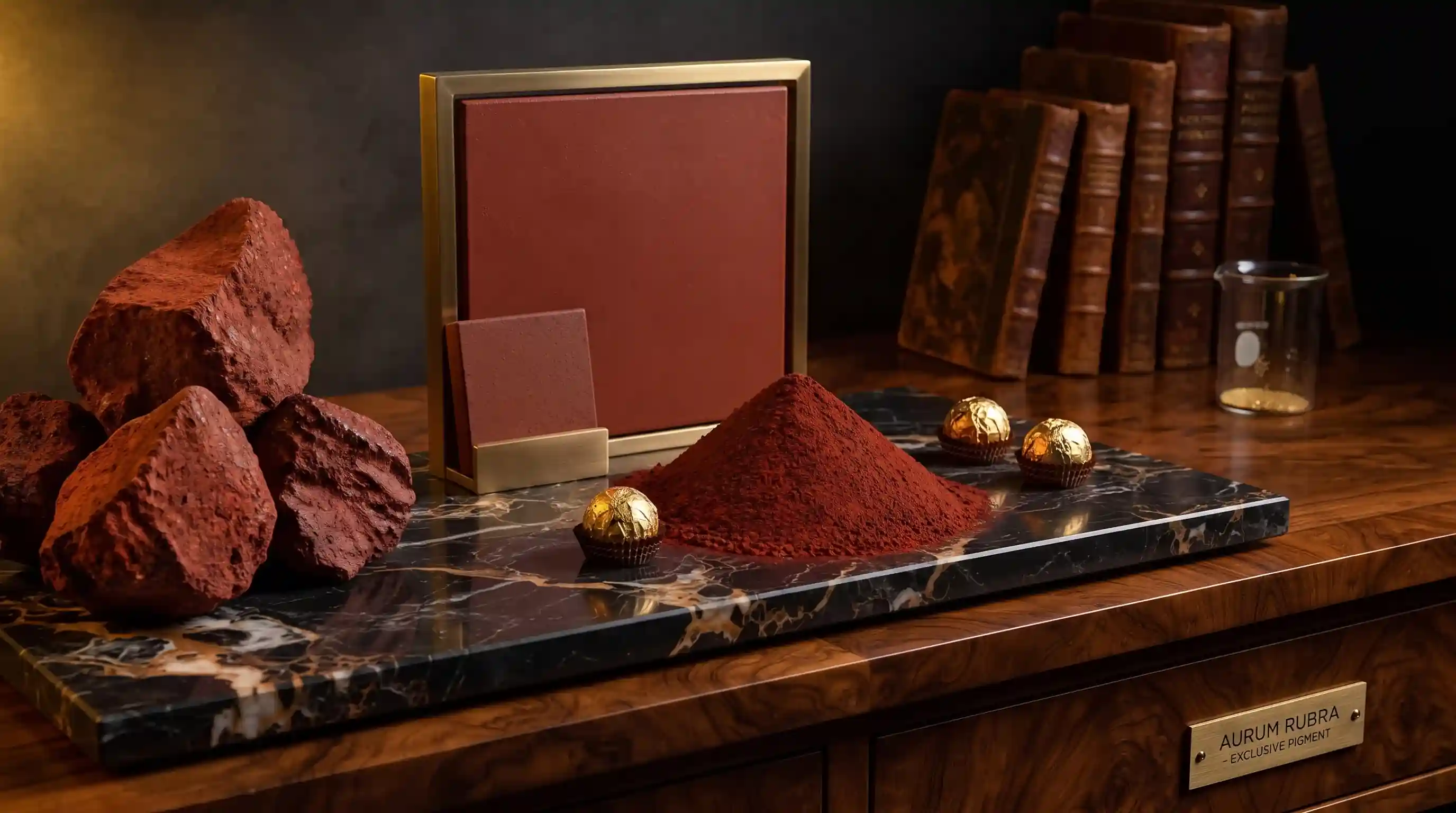
Complete introduction of red iron oxide (ochre) and its basic features
Red iron oxide (ochre) is one of the most well-known and widely used mineral pigments in the world, known by the chemical formula Fe2O3. In the Persian language, this substance is also known by other names such as "Ochre", "Hematite Iron Oxide", and "Earth Orpiment". Due to its distinct red color, high chemical stability, and resistance to light and heat, it is used in various industries. In the Amiran Stone Mineral project, this product is supplied as a powder with precise meshing for pigment, coating, cement, and ceramic product applications.
The importance of red iron oxide (ochre) in modern industries is not limited only to its beautiful color. Due to its special crystalline structure, controlled particle size, and uniform distribution, this mineral has a very high covering power on various surfaces. This exact feature has led paint, ceramic, concrete, and tile manufacturers to rely on it as a key raw material. In fact, the high hiding power of this pigment is one of the most important reasons for replacing many synthetic and expensive dyes with it.
From an appearance perspective, red iron oxide (ochre) is a soft, dry powder with a color ranging from red to reddish-brown. The final color of this product can vary from bright red to dark red depending on purity, particle size, and processing method. The smaller the particle size and the more uniform their distribution, the more vibrant the final color and the better the coverage on the surface. For this reason, precise control of meshing in the production process is considered one of the most important quality factors of this product.
Chemically, red iron oxide (ochre) is a stable compound insoluble in water and most organic solvents. This feature makes the product highly resistant to air humidity, rainfall, and even the alkaline conditions present in mortars and concretes. Additionally, this material does not fade under the sun's ultraviolet rays, making it an ideal choice for outdoor applications and building facades. The thermal stability of this product is also suitable up to relatively high temperatures, which is of great importance in the ceramic industry.
Ultimately, red iron oxide (ochre) is not just a coloring agent, but an efficient technical additive that improves the mechanical and aesthetic properties of the final product. In the following chapters, we will examine in detail the reasons for the high hiding power, the role of particle size, meshing, and the specialized applications of this product in various industries. If you are looking to read more about selecting and purchasing this product, reading the Buying guide for high quality and purity red iron oxide (ochre) will help you better understand the key quality criteria.
Crystalline structure and scientific reasons for the hiding power of red iron oxide (ochre)
High hiding power in red iron oxide (ochre) is not a coincidence, but is rooted in the crystalline structure and optical properties of this material. This pigment belongs to the hematite structure, which crystallizes in the trigonal crystal system. In this structure, iron and oxygen atoms are arranged regularly and densely next to each other, creating a high density that is itself one of the main factors of the coloring power and covering capability of this material.
From an optical perspective, when light strikes a red iron oxide (ochre) particle, a large part of it is absorbed and another part is diffusely reflected. This light scattering and absorption allows the particles of this pigment to completely cover the underlying surface and create a distinct red color on the surface. The closer the particle size is to the wavelength of visible light, the more the light reflection is improved and the more complete the impression of coverage is created. This feature shows the main difference between mineral pigments and weak synthetic coloring materials.
Another main reason for the hiding power is the shape and morphology of red iron oxide (ochre) particles. The particles of this product are usually produced in flake, spherical, or irregular forms, and depending on the processing method, they can create different arrangements on the surface. Flake particles are particularly capable of covering large surfaces because they lie on top of each other like overlapping layers and prevent light from penetrating the underlying surface. This feature is very valuable in architectural paints and industrial coatings.
In addition to particle structure, the high density of red iron oxide (ochre) is also effective in its hiding power. A high-density material contains a larger amount of solid particles in a smaller volume of the product, resulting in a colored layer formed on the surface with greater thickness and strength. This causes the consumption rate of this pigment to decrease compared to ordinary paints and reduces the final production cost. Simply put, red iron oxide (ochre) offers more coverage with a smaller amount.
Another important point is particle size distribution. The presence of particles with very diverse and uncontrolled sizes reduces color uniformity and decreases hiding power. However, in a high-quality product, this distribution is precisely controlled so that the particles are within a specific and coordinated range. To better understand the differences between various types of this product and choose the appropriate type, you can read the Guide to choosing the best type of red iron oxide (ochre) . This guide helps you better understand the relationship between particle structure and final application.
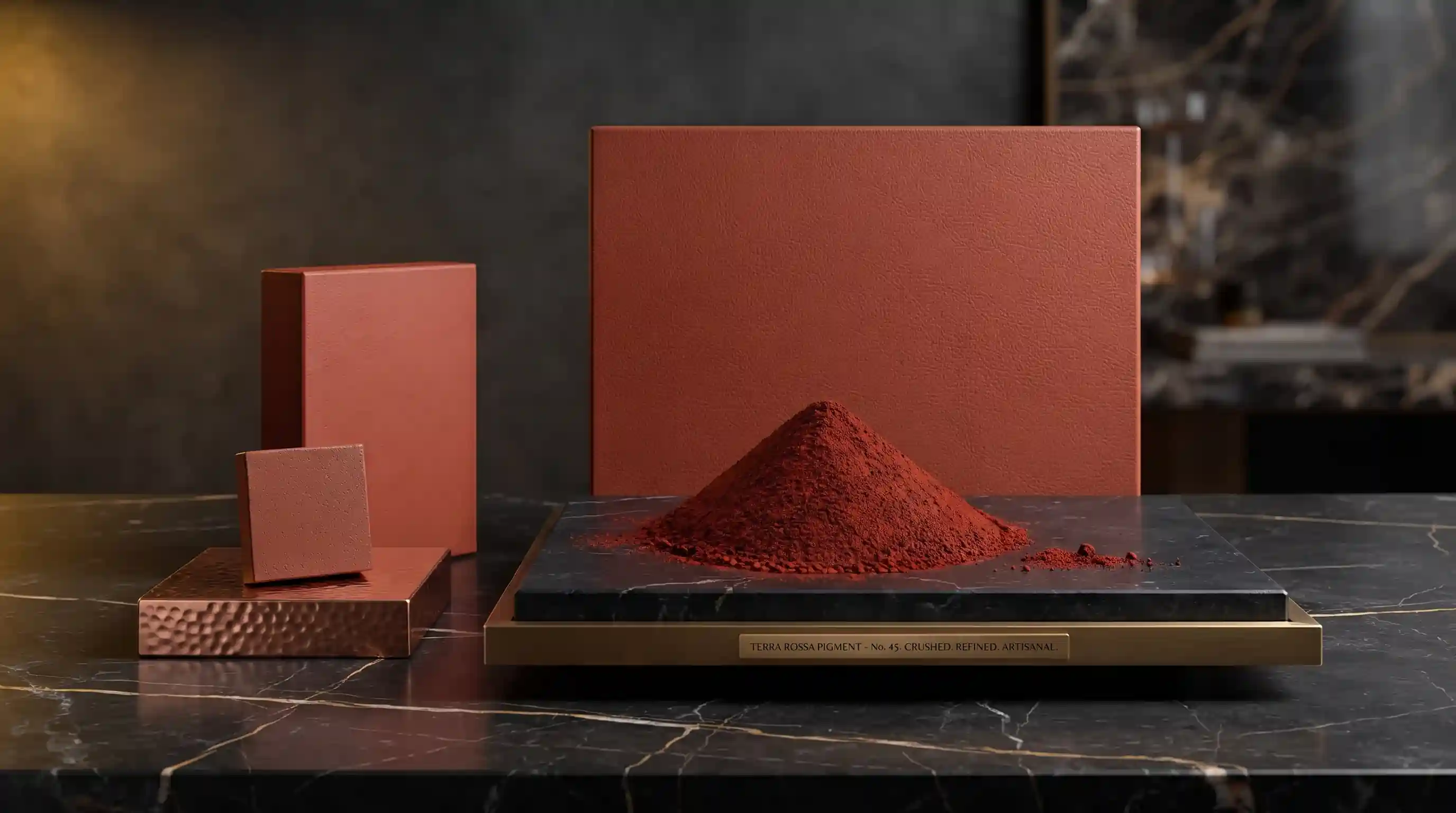
The role of particle size and 450 to 1500 mesh grading in coating quality
Particle size is one of the most vital parameters in determining the quality of red iron oxide (ochre) and its hiding power. In the mineral pigment manufacturing industry, particle size is expressed in units of "mesh". The higher the mesh number, the smaller the particle size. The product supplied in the Amiran Stone Mineral project is produced in the range of 450 to 1500 mesh, indicating very fine and homogeneous particles. This fineness of particles has a direct impact on coating quality and color dispersion in the final product.
When red iron oxide (ochre) particles are very fine, their specific surface area increases. A higher specific surface area means there are more particles in one gram of the product, and each particle can cover a portion of the underlying surface. The result is the creation of a dense, uniform, and flawless colored layer. Furthermore, finer particles have a better ability to disperse within color carriers (such as resin, water, or oil) and prevent rapid settling. This feature is of great importance in the production of industrial paints and high-quality coatings.
On the other hand, excessively fine particles can also create challenges. Very fine particles tend to aggregate and clump together because inter-particle forces (such as Van der Waals forces) are felt more strongly in small particles. Therefore, the manufacturer must use appropriate methods to prevent their aggregation in addition to micronizing the particles. To familiarize yourself with practical methods to prevent this problem, the article How to prevent clumping of red iron oxide (ochre)? provides useful solutions. Controlling moisture, proper packaging, and using anti-caking agents are among the common methods.
The mesh range of 450 to 1500 mesh allows the user to choose the product suitable for their needs. For example, for precision pigments and high-quality paints, higher (finer) meshes are more suitable because the final color becomes clearer and more uniform. Conversely, for applications such as cement or concrete that require deep coloring and penetration into the matrix, middle meshes yield better efficiency. Correct mesh selection directly affects the final cost and project quality.
Technical reviews show that a product with precise mesh grading and homogeneous distribution can reduce pigment consumption to a significant level. The reason for this is the high efficiency of each particle in covering and the absence of useless large particles. As a result, purchasing a high-quality product with standard mesh grading not only raises the quality of the final product, but is also economically justifiable. This matter is doubly important in large construction projects and mass ceramic production.
Application of red iron oxide (ochre) in pigment and coating industries
The main and most extensive application of red iron oxide (ochre) is in the pigment industry and the production of colored coatings. This material is used as a high-quality mineral pigment in the production of architectural paints, industrial paints, metal coatings, marine paints, and even printing inks. The main reason for this wide application is the stable color, high hiding power, and resistance to environmental conditions that this product provides. In many construction projects, paints based on red iron oxide (ochre) are used for facades, walls, railings, and even floors.
In the industrial coatings industry, this pigment plays a vital role in protecting metal and concrete surfaces. Red iron oxide (ochre) as a coating pigment not only creates a pleasing appearance, but also acts as a physical barrier against the penetration of moisture, oxygen, and chemicals. This feature is extremely valuable in bridges, pipelines, marine structures, and agricultural machinery. The combination of high hiding power with chemical resistance extends the lifespan of the coating and reduces maintenance costs.
In the production of watercolors, plastics, and paper, red iron oxide (ochre) is also used as a mineral coloring agent. The main advantage of this material over synthetic dyes is that it is non-toxic and poses no risk to human health or the environment. This feature has made the use of this pigment in consumer products such as toys, food packaging, and health products authorized and growing. Many manufacturers are looking to replace chemical dyes with safe mineral pigments.
One of the important characteristics in pigment application is the "Dispersion" of the product. High-quality red iron oxide (ochre) must disperse well in the solvent medium and not settle. Dispersion quality depends on particle size, particle shape, and the presence of impurities on the particle surface. A product with precise mesh grading and high purity exhibits better dispersion, resulting in a final color that is more transparent, uniform, and durable. This is a key quality assessment criterion in the production of high-quality paints.
Finally, red iron oxide (ochre) is ideal for exterior and outdoor applications due to its UV light stability. Architectural paints that use this pigment remain without fading or discoloration for years. If you intend to purchase this product for pigment applications, viewing the page Red iron oxide (ochre) on the Amiran Rock Minerals Project website can provide you with useful information. Choosing the right product with the correct mesh and purity guarantees the quality of your final product.
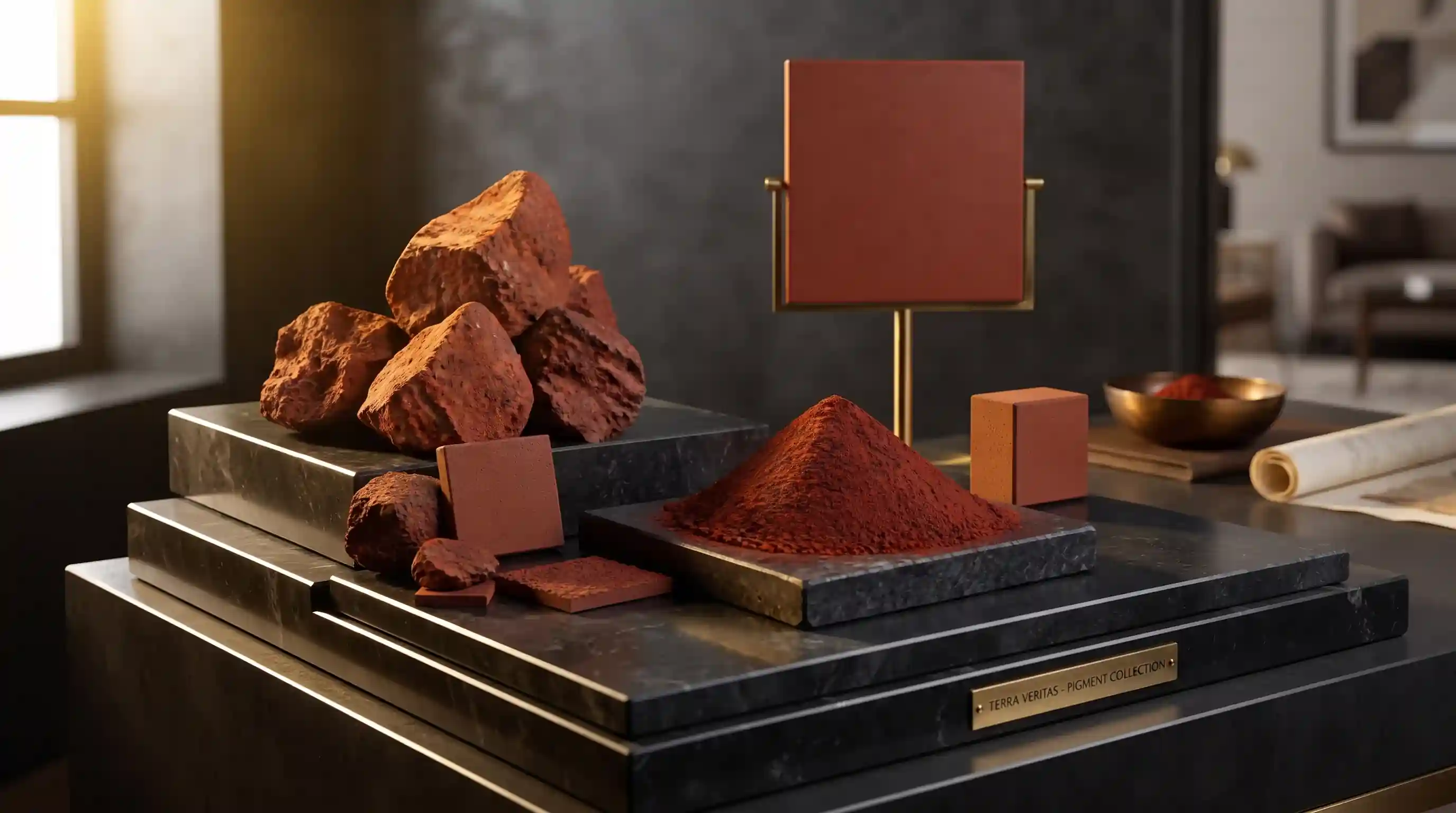
Application of red iron oxide (ochre) in the cement and concrete industry
One of the most important and yet lesser-known applications of red iron oxide (ochre) is in the cement and concrete industry. This product is used as a coloring agent and technical additive in the production of colored concrete, decorative mortars, cement bricks, artificial stones, and even industrial flooring. The main reason for this application is the high resistance of this pigment in the highly alkaline environment of cement and its ability to retain color over time.
The cement paste environment has a very high pH (around 12 to 13), which degrades or fades many organic and synthetic pigments over time. However, red iron oxide (ochre) as a stable mineral oxide does not change in this corrosive environment and retains its color for decades. For this reason, colored concretes made with this material are widely used in building facades, sidewalks, squares, and urban spaces. Color durability in civil engineering projects is an important quality criterion.
In the production of colored concrete, red iron oxide (ochre) with a medium mesh is usually used. The reason for this is the need for proper dispersion within the cement matrix and prevention of particle segregation. Particles must be fine enough to create a uniform color, but not so fine as to cause rapid setting or reduce concrete workability. The consumption percentage of this pigment in concrete usually varies between 1 to 5 percent of the cement weight and is determined depending on the required color intensity. Excessive consumption can negatively affect the mechanical strength of concrete.
In addition to coloring, red iron oxide (ochre) plays another technical role in the cement industry. This material, as a mineral additive, can be effective in the clinkering process and setting time adjustment of cement. The presence of iron oxide in the raw cement mixture helps form the required mineral phases at kiln temperatures, thereby improving the final cement quality. This is an example of the technical applications of this product, beyond its coloring use.
In large concrete projects, color uniformity between different batches is very important. If the pigment quality changes during production, the final color of the concrete will vary in different parts of the building. For this reason, using a high-quality product with consistent specifications is a necessity. The product supplied in the Amiran Rock Minerals Project, with controlled mesh grading and appropriate purity, is a reliable option for this application. Also, resistance to freezing and thawing/wet-dry cycles makes colored concrete containing this pigment perform well in various climatic conditions.
Application of red iron oxide (ochre) in ceramic products
The ceramic industry is another major consumer of red iron oxide (ochre). This product is widely used in the production of tiles, ceramics, porcelain tableware, facing bricks, decorative ceramics, and even sanitary porcelain bodies. In this industry, red iron oxide (ochre) is used both as a coloring pigment in glazes and as an effective material in the structure of ceramic bodies. The ability of this material to withstand high temperatures makes it a key material in ceramic firing kilns.
In glazing, red iron oxide (ochre) acts as a coloring pigment, creating red, brown, cream, and even yellow colors (depending on the combination with other oxides and kiln conditions). This pigment performs well in alkaline, lead, and brilliant glazes and maintains its stability at firing temperatures of 900 to 1200 degrees Celsius. The important point is that the final color in the glaze strongly depends on the kiln atmosphere conditions (oxidizing or reducing) as well as the pigment particle size. Therefore, precise control of product specifications is vital in this industry.
In the ceramic body, red iron oxide (ochre) can affect the post-firing color, porosity level, and even product strength. For example, in the production of facing bricks and decorative ceramics, this material helps create a warm and natural color that is very popular in traditional and modern architecture. Also, in traditional Iranian ceramics, the use of this pigment has a long history and is still used by artists and manufacturers.
An important challenge in ceramic application is color uniformity in mass production. If the particle size or their distribution changes in a batch of product, the tile color will differ in various parts of the kiln. This leads to increased waste and reduced manufacturer profit. For this reason, using a product with precise mesh grading (such as the 450–1500 mesh range) and controlled purity is a competitive necessity for ceramic manufacturers. The Amiran Rock Minerals Project product is processed according to these needs.
In addition, red iron oxide (ochre) is also used in the production of engobe and silex paints. In these applications, very fine particles (high meshes) contribute to clearer colors and better coverage on the raw surface. As a result, the final ceramic will have a uniform and high-quality appearance. The combination of thermal stability, beautiful color, and high coverage makes this product an irreplaceable material in the ceramic industry.
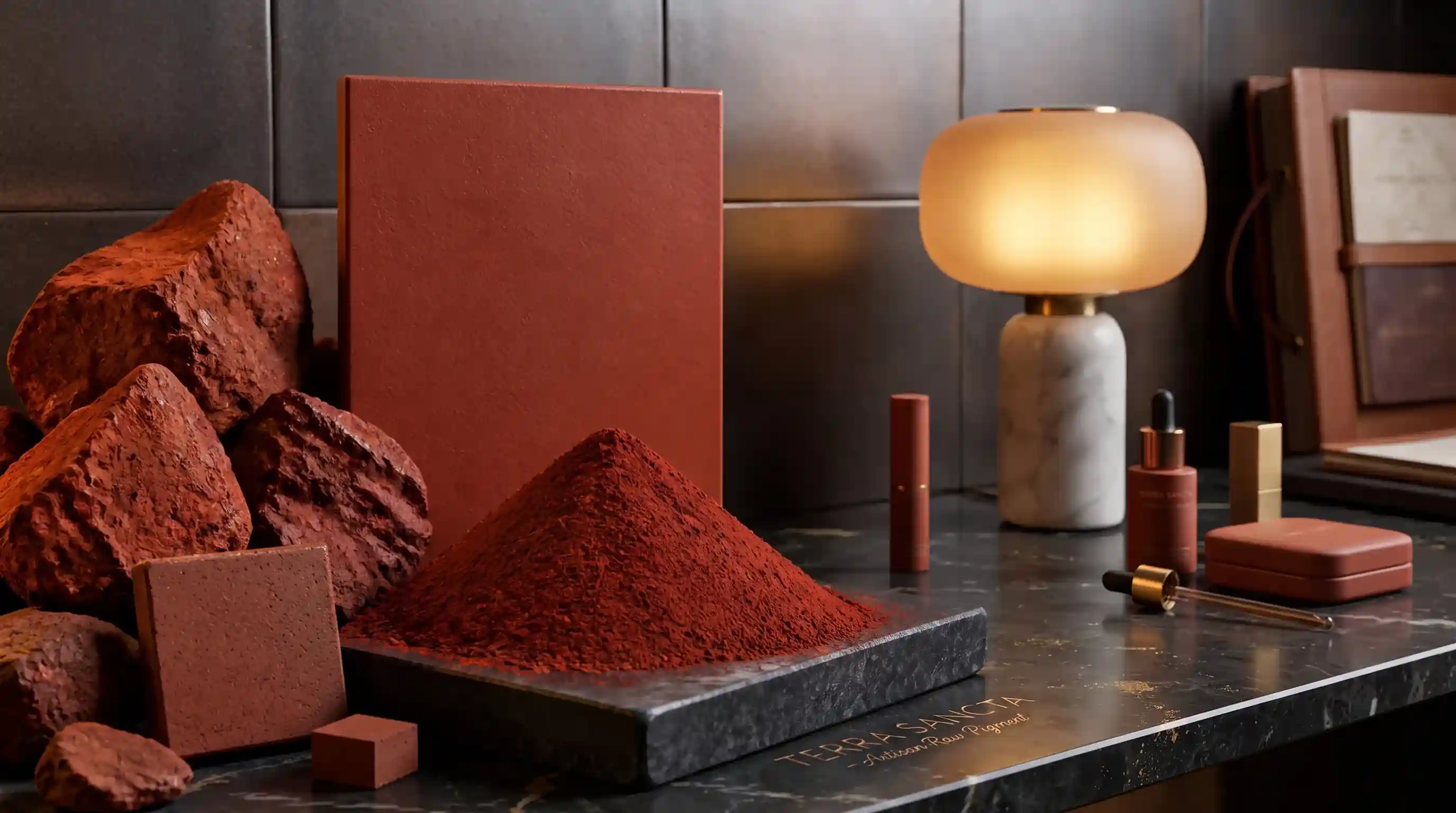
Quality control, purity, and storage of red iron oxide (ochre)
The quality of red iron oxide (ochre) depends on a set of parameters that must be carefully controlled during the production process. The most important of these parameters are: chemical purity (Fe2O3 percentage), particle size distribution, moisture content, color and tinting strength, and the presence of impurities such as silica, alumina, and carbonates. Each of these factors can affect the final product quality and its application in various industries.
Chemical purity is one of the most important criteria. The higher the Fe2O3 percentage, the more intense the red color and the greater the hiding power. Impurities present in the product can cause color changes, reduced color intensity, and even spotting on the final surface. For example, the presence of free silica can cause a reduction in color intensity, while the presence of carbonate compounds can cause bubbles in ceramic glazes or reduced adhesion in paints. Therefore, precise processing and evaluation of the product is essential.
Moisture is a very important factor in the storage of red iron oxide (ochre). This product is supplied in powder form, and if its moisture is high, the particles stick together and form lumps. Caking not only causes a drop in color quality, but also creates problems in the production process (such as clogged pipes and filters). To prevent this problem, the product moisture must be kept within the allowable limit and stored in suitable packaging in a dry space. Methods for preventing caking are discussed in full in the specialized article How to prevent caking of red iron oxide (ochre)? have been thoroughly examined.
In terms of storage, this product should be kept in dry, cool, and well-ventilated warehouses. Direct exposure to rain, ground moisture, and water leaks causes a rapid drop in its quality. Also, the packaging should be such that it prevents the ingress of moisture and external contamination. In large projects, it is recommended to consume product inventory on a rotational basis to avoid long-term storage and the risk of caking.
Finally, product quality evaluation should include laboratory tests such as particle size analysis, Fe2O3 percentage determination, color test, and hiding power test. Professional buyers usually sample and review laboratory results before purchasing in high volumes. To get acquainted with key quality evaluation tips before purchasing, Buying guide for high quality and purity red iron oxide (ochre) is a practical resource. This guide helps you recognize true quality standards and avoid purchasing the wrong product.
Conclusion: Why does red iron oxide (ochra) have a high hiding power?
In this article, we examined the various reasons for the high hiding power of red iron oxide (ochra). From the hematite crystal structure and high density of this material to the fine particle size and their uniform distribution, each plays a role in creating a strong and durable colored coating. The combination of these factors allows this mineral pigment to cover a larger surface area with a smaller consumption amount, making it an economical and high-quality option for various industries.
The chemical properties of this product, namely stability in alkaline environments, UV resistance, water insolubility, and high thermal stability, make it suitable for demanding applications such as concrete, ceramics, and industrial coatings. While many synthetic dyes degrade under these conditions, red iron oxide (ochra) retains its color for many years. This durability is the main reason for the popularity of this material in construction projects and industrial manufacturing.
The mesh size range of 450 to 1500 mesh allows users to choose the product that suits their needs. For precise pigments and ceramic glazes, higher meshes are more suitable, while for concrete and cement, middle meshes perform better. Understanding these differences helps optimize costs and improve the quality of the final product. Additionally, moisture control and preventing caking are simple yet vital measures to maintain product quality during storage.
From an environmental perspective, red iron oxide (ochra) is a safe and non-toxic mineral substance that poses fewer health risks to workers and consumers compared to many chemical dyes. This feature, along with affordable pricing and the availability of raw materials, has solidified this product's position in the paint, ceramics, and construction industries. At the Amiran Stone Mineral project, this product is processed with strict quality control and standard mesh sizing for pigment, coating, cement, and ceramic product applications.
Ultimately, choosing a reputable supplier familiar with the technical specifications of the product guarantees the quality of your project. For complete information about the product and to request a supply, you can visit the page red iron oxide (ochra). Also, to choose the appropriate type of product for your application, reading the guide to choosing the best type of red iron oxide (ochra) is recommended. With a proper understanding of this product's characteristics, you can harness its full potential in your projects.
| Question | Answer |
|---|---|
| What is red iron oxide (ochra)? | It is a mineral pigment with the formula Fe2O3 used for coloring and coating in the paint, cement, and ceramic industries. |
| Why does this product have high hiding power? | Due to the hematite crystal structure, high density, fine particles, and uniform particle size distribution which creates complete surface coverage. |
| What is the mesh range of this product? | This product is supplied in a mesh range of 450 to 1500 mesh, indicating very fine particles. |
| What are the main applications of red iron oxide (ochra)? | Pigment, industrial coatings, colored cement and concrete, and ceramic products such as tiles and glazes. |
| Does this product fade in sunlight? | No, this product has high resistance to UV radiation and retains its color outdoors. |
| Is red iron oxide (ochra) stable in the alkaline environment of cement? | Yes, this product is stable in the highly alkaline environment of cement and concrete and retains its color. |
| What should be done to prevent caking? | Moisture control, proper packaging, and storage in a dry place are the most important solutions. |
| What role does it play in ceramics? | It is used as a colorant in ceramic glazes and bodies and is stable at kiln temperatures. |
| How much is used in colored concrete? | Usually between 1 and 5 percent of the cement weight is used, depending on the required color intensity. |
| How to identify a high-quality product? | Checking Fe2O3 purity, particle size distribution, moisture, and color testing are the main criteria for quality evaluation. |
Technical specifications and applications of red iron oxide (ochre) in this article have been prepared based on product information of Kani Sang Amiran project (https://ksamiran.ir/products/red-iron-oxide/)
دور الکاولین فی خفض تکالیف الإنتاج فی الصناعات المعدنیة
دور الکاولین فی خفض تکالیف الإنتاج فی الصناعات المعدنیة
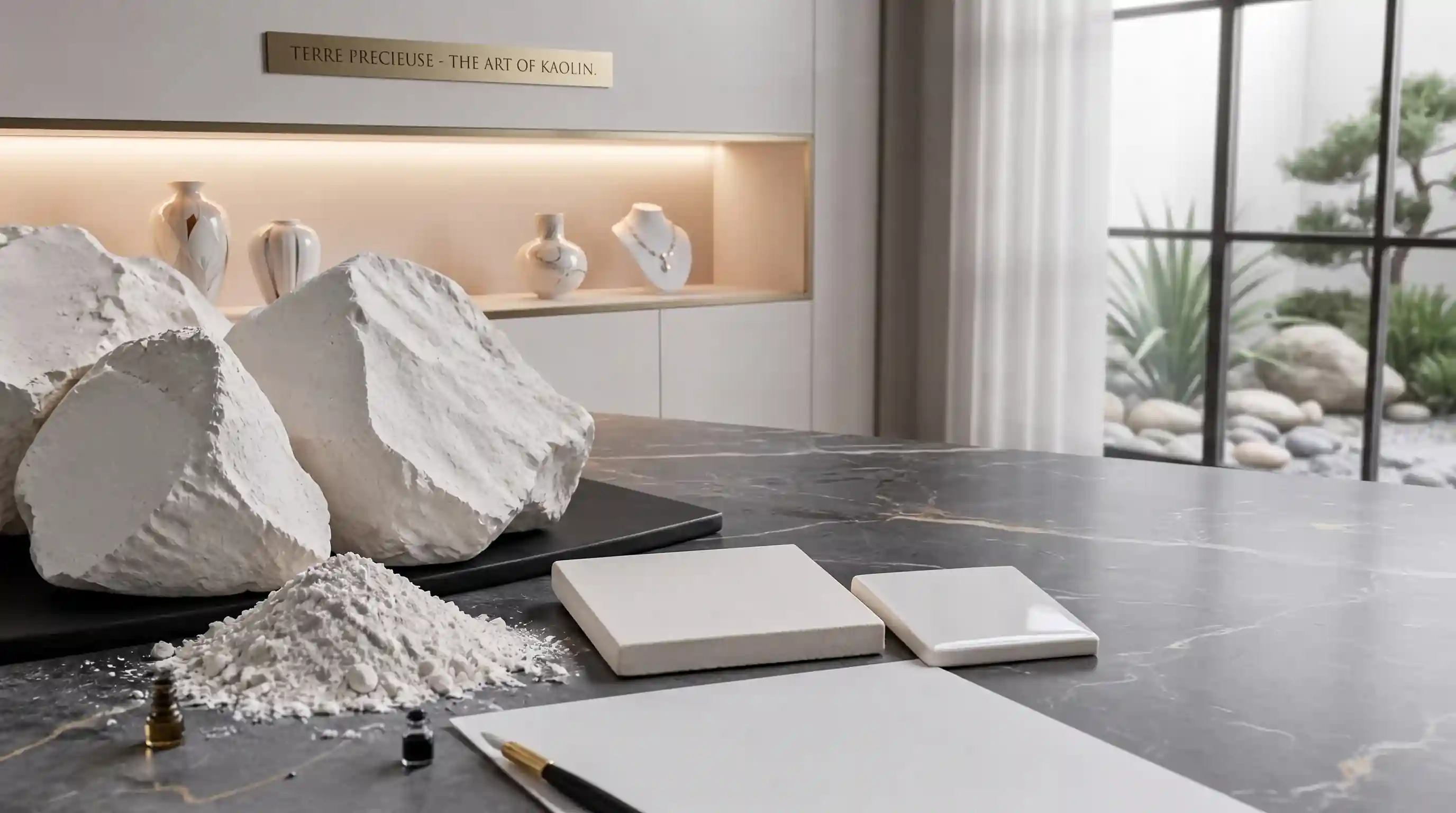
ما هو الکاولین؟ مقدمة إلى المنجم الأبیض للصناعات الحدیثة
الکاولین (Kaolin)، الذی یُعرف أیضاً فی اللغة الفارسیة بـ «الصلصال الصینی» (خاک چینی)، هو أحد أکثر المعادن الطینیة استخداماً فی العالم. هذه المادة المعدنیة ذات الصیغة الکیمیائیة Al2Si2O5(OH)4 تنشأ من التعریة والتجویة طویلة الأجل للصخور الغنیة بالفلسبار مثل الجرانیت والریولیت على مدى ملایین السنین. یُستمد اسم هذا المعدن من منطقة تُسمى «کاولینغ» فی الصین حیث استُخرجت هذه المادة لأول مرة، ولهذا السبب تُعرف أیضاً بالصلصال الصینی.
السمة الممیزة للکاولین هی لونه الأبیض الساطع جداً، وملمسه الناعم، والتصاقه المنخفض، ومقاومته العالیة للمواد الکیمیائیة والحرارة. هذه المجموعة من الخصائص جعلت الکاولین مادة استراتیجیة لمختلف الصناعات. الیوم، یُستخدم هذا المعدن على نطاق واسع فی إنتاج البلاط، والمنتجات السیرامیکیة، والطلاء الزجاجی (الطلاء اللامع)، والورق، والدهانات، ویتسع نطاق تطبیقاته کل یوم.
لکن أهمیة الکاولین لا تقتصر فقط على خصائصه الفیزیائیة والکیمیائیة. فی العقود الأخیرة، أدى تزاید المنافسة فی الأسواق العالمیة، والضغط المستمر لخفض تکالیف الإنتاج، وضرورة الامتثال للمعاییر البیئیة إلى إبراز مکانة هذا المعدن الأبیض أکثر فأکثر. لقد أدرکت المصانع أن استخدام الکاولین عالی الجودة ذی التوزیع المناسب لحجم الجسیمات یمکن أن یحسن جودة المنتج النهائی ویقلل تکالیف الإنتاج بشکل کبیر.
فی الواقع، یمکن القول إن الکاولین هو «معدن متعدد الاستخدامات»؛ فهو مادة وفیرة واقتصادیة ومتعددة الأغراض وتتواجد فی ترکیبة العدید من المنتجات التی نستخدمها کل یوم. فی جمیع أنحاء العالم، تتدفق ملیارات الدولارات من القیمة الاقتصادیة نتیجة لإنتاج ومعالجة واستهلاک هذا المعدن، وإیران بدورها تحتل مکانة خاصة فی هذا المجال نظراً لامتلاکها احتیاطیات مناسبة.
فی صناعات التعدین الیوم، یلعب الکاولین دوراً یتجاوز کونَه مجرد مادة خام بسیطة. یظهر هذا المعدن عملیاً کـ «عامل لخفض التکالیف»: فهو یمکن أن یحل محل المواد الأکثر تکلفة ویقلل من استهلاک الطاقة والوقت من خلال تحسین عملیات الإنتاج. ولهذا السبب فإن دراسة دور الکاولین فی خفض تکالیف الإنتاج فی صناعات التعدین، أصبحت موضوعاً حیویاً للمدیرین والمهندسین وصناع القرار فی المصانع.
فی هذه المقالة، نرید أن نناقش کیف یساهم الکاولین فی خفض التکالیف فی مختلف الصناعات ولماذا یمکن أن یکون الاختیار الصحیح لنوع وحجم جسیمات هذه المادة له تأثیر هائل على ربحیة خطوط الإنتاج. ولکن قبل کل شیء، نحتاج إلى التعرف بشکل أکبر على الخصائص التقنیة والتخصصیة لهذا المعدن.
أحد أهم العوامل المحددة لجودة الکاولین وتطبیقاته وسعره هو حجم جسیماته. فی الصناعة، یتم قیاس حجم جسیمات المعادن بوحدة «المش» (Mesh)؛ وهی وحدة تشیر إلى عدد الثقوب الموجودة فی کل بوصة مربعة من المنخل. کلما زاد رقم المش، أصبحت الجسیمات أصغر، وزادت مساحتها السطحیة النوعیة، وتغیر سلوک المادة فی العملیات الصناعیة.
الکاولین المقدم من قبل مشروع کانی سنغ أمیران یتم إنتاجه وعرضه فی نطاق من 450 إلى 1500 مش؛ وهو نطاق واسع یلبی الاحتیاجات المتنوعة لمختلف الصناعات. یتیح هذا التنوع للمصانع اختیار الدرجة الدقیقة التی تتطلبها عملیات إنتاجها ومنع شراء مواد إضافیة أو غیر مناسبة أو درجات أغلى من اللازم.
نطاق المش وتطبیقاته
- کاولین 450 مش: جسیمات خشنة نسبیاً لتطبیقات مثل هیاکل البلاط والمنتجات السیرامیکیة التی تتطلب الملمس والقوة والتشکیل.
- کاولین 800 إلى 1000 مش: مناسب لصناعة الورق والدهانات التی تتطلب الخصائص المالئة، والتغطیة، والسطح الأملس.
- کاولین 1200 إلى 1500 مش: جسیمات دقیقة للغایة للتطبیقات الدقیقة مثل الصقیل (الطلاء الزجاجی) والطبقات الخاصة حیث یکون التوحید ذو أهمیة عالیة.
الخصائص الرئیسیة للکاولین
- لون أبیض ناصع: أهم میزة للکاولین والتی تجعله مثالیًا للمنتجات الزخرفیة، والصحیة، ومجال الطباعة.
- التصاق ولزوجة منخفضة: یتیح سهولة الاستخدام والضخ والتحکم فی الترکیبات.
- مقاومة کیمیائیة عالیة: یُظهر مقاومة جیدة للأحماض والقواعد ویحافظ على استقرار المنتج.
- توزیع منتظم للجسیمات: یضمن استقرار العملیة والجودة الثابتة للمنتج النهائی.
- خالٍ من الشوائب: انخفاض شوائب الحدید والتیتانیوم یحافظ على لون وجودة المنتج النهائی.
إلى جانب هذه التطبیقات المعروفة، یحتل الکاولین مکانة خاصة فی الصناعات الأکثر تقدمًا مثل إنتاج المحفزات الکیمیائیة؛ یمکن للمهتمین بهذا المجال قراءة مقالة دور الکاولین فی إنتاج المحفزات الکیمیائیة المتقدمة.
تکمن أهمیة اختیار نطاق الشبکة المناسب فی أن الجسیمات الأصغر لها مساحة سطحیة أکبر وبالتالی توفر أداءً أفضل فی عملیات مثل طلاء الورق أو التزجیج؛ ولکن فی الوقت نفسه، فإن معالجتها تبتلع تکلفة أعلى. لذلک، فإن اختیار الدرجة المناسبة هو قرار فنی واقتصادی فی آن واحد ویؤثر بشکل مباشر على التکلفة النهائیة للمنتج.
فی النهایة، فإن الحصول على الکاولین من مصدر عالی الجودة یحترم نطاق الشبکة بدقة وبشکل منتظم، یمنع حدوث مشاکل مثل اختلاف اللون، التشققات، انخفاض القوة أو تذبذب جودة المنتج، وبذلک یقلل التکالیف الخفیة الناجمة عن الهدر وإعادة العمل إلى الحد الأدنى.
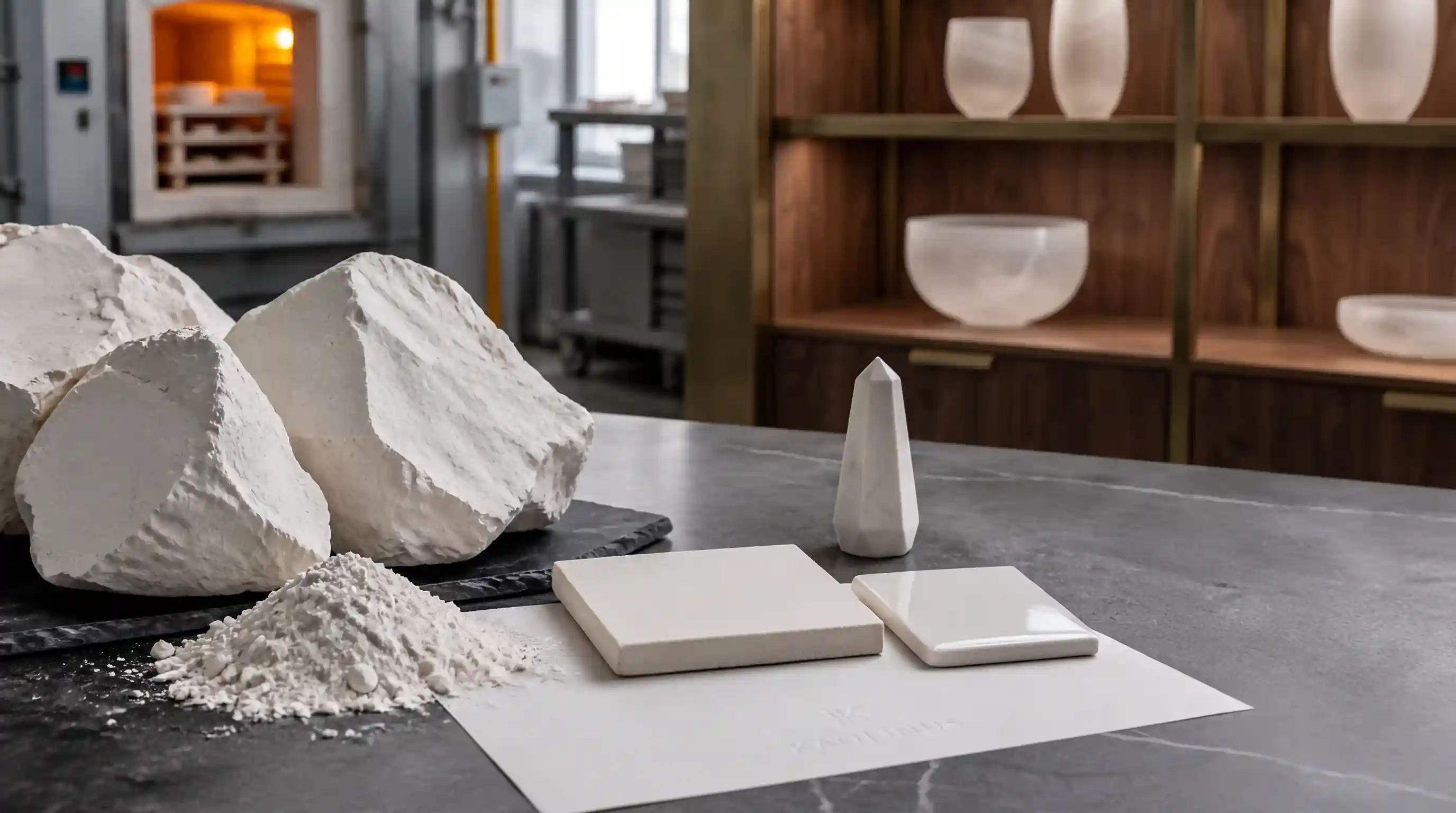
تُعد صناعة البلاط والسیرامیک واحدة من أکبر المستهلکین للکاولین فی العالم. یُستخدم الکاولین فی أجسام البلاط، الأدوات الصحیة، الأوانی الخزفیة وغیرها من منتجات السیرامیک کمادة خام أساسیة ورئیسیة. نظرًا لترکیبه الکیمیائی الخاص (مصدر للألومینا والسیلکا)، فإن هذا المعدن یخلق بنیة مستقرة، صلبة ومقاومة أثناء الحرق، مما یضمن الخصائص المیکانیکیة للمنتج النهائی.
خفض التکالیف من خلال استبدال المواد الباهظة الثمن
إحدى أهم الطرق التی یساهم بها الکاولین فی خفض تکالیف الإنتاج فی صناعات السیرامیک هی استبدال المعادن الأکثر غلاءً وندرة. یمکن للکاولین فی العدید من الترکیبات أن یحل محل جزء من الفلسبار، التلک أو السیلکا مع الحفاظ على الخصائص التقنیة المطلوبة. وباعتبار الکاولین معدناً وفیراً ورخیص الثمن نسبیاً، فإن هذا الاستبدال یؤدی مباشرة إلى خفض تکلفة المواد الخام الأولیة ویغیر المعادلة الاقتصادیة للمصنع لصالحه.
خفض درجة حرارة الحرق وتوفیر الطاقة
یمکن أن یساعد وجود الکاولین فی ترکیبة جسم السیرامیک على تقلیل درجة حرارة الحرق وتقصیر دورة الفرن. تُعد أفران حرق السیرامیک واحدة من أکثر المعدات استهلاکاً للطاقة فی الصناعة، وأی انخفاض بدرجة واحدة فی حرارة الحرق یعنى توفیراً کبیراً فی استهلاک الغاز أو الکهرباء. بالإضافة إلى ذلک، فإن تقلیل وقت دورة الحرق یزید من الساعة الإنتاجیة للخط ویوزع التکالیف العامة على کمیة أکبر من المنتجات.
تقلیل الهدر وزیادة الکفاءة
یعمل الکاولین، بفضل التوزیع المنتظم للجسیمات والنقاء العالی، على تحسین اللدونة وقابلیة التشکیل لجسم السیرامیک. هذا یعنی أن المنتجات النهائیة تتعرض لتشققات أقل، وتشوهات أقل، وینخفض هدر خط الإنتاج. الهدر الأقل یترجم إلى استخدام أفضل للمواد الخام، وخفض تکالیف إعادة العمل، وتقلیل استهلاک الطاقة، وفی النهایة زیادة ربحیة المصنع.
تحسین جودة المنتج النهائی
یمنح الکاولین منتجات السیرامیک القوة المیکانیکیة، البیاض، والمظهر الجمیل. المنتجات ذات الجودة العالیة تحظى بأسعار أعلى فی السوق وترفع مکانة العلامة التجاریة للمصنع فی أذهان العملاء. علاوة على ذلک، یُظهر البلاط والسیرامیک المنتجان بالکاولین عالی الجودة مقاومة أکبر للتآکل، الصدمات والرطوبة، مما یرفع من العمر الافتراضی للمنتج.
بالنسبة لمصانع البلاط، یُعتبر استخدام الکاولین بقطر 450 مش للأجسام والدرجات الأصغر للتزجیج مزیجاً مثالیاً یرفع من کفاءة العملیة ویتحکم فی التکالیف فی آن واحد. فی مشروع کانی سنغ أمیران، یتم إنتاج الکاولین فی نطاق مش یتراوح بین 450 إلى 1500، ویمکنه تلبیة هذه الاحتیاجات المتنوعة والمزدوجة فی خط إنتاج واحد.
یُعد التزجیج أحد أهم أجزاء المنتج السیرامیکی؛ وهو عبارة عن طبقة زجاجیة توضع على سطح البلاط، الأوانی والأدوات الصحیة لتمنحها الجمال، ومقاومة الماء، والمتانة. فی إنتاج التزجیج، یلعب الکاولین دورًا حیویًا للغایة ویکاد لا یخلو أی تکوین تزجیج منه. ولهذا السبب، فإن جودة التزجیج، وبالتالی جودة المنتج النهائی، ترتبط ارتباطًا مباشرًا بالکاولین المستخدم.
دور الکاولین کعامل تعلیق
أهم تطبیق للکاولین فی الطلاء هو عمله کعامل تعلیق (Suspender). تتیح الدقائق الدقیقة جداً للکاولین للمواد الأخرى الموجودة فی الطلاء أن تظل معلقة فی الماء ولا تترسب. تجعل هذه المیزة الطلاء یظل متجانساً أثناء الاستخدام وتخلق تغطیة موحدة على السطح. بدون ما یکفی من الکاولین، یترسب الطلاء بسرعة، مما یعطی تغطیة غیر متجانسة وتنخفض جودة المنتج بشکل حاد.
لماذا هناک حاجة للکاولین الدقیق؟
فی صناعة الطلاء، تُستخدم عادةً الدرجات الدقیقة جداً من الکاولین (من 1200 إلى 1500 شبکة). تتمتع الدقائق الأصغر بمساحة سطح أکبر وتخلق سلوکاً ریولوجیاً أفضل فی معجون الطلاء. وأیضاً أثناء الحرق، تذوب الدقائق الدقیقة بسرعة أکبر وتصنع سطحاً زجاجیاً موحداً وخالیاً من العیوب. إن تحضیر هذه الدرجة الدقیقة من جهة تصنیع موثوقة یضمن حصول الطلاء على جودة ثابتة فی کل مرة یتم فیها الإنتاج.
تقلیل التکلفة فی عملیة الطلاء
- تقلیل استهلاک الطلاء: التغطیة الموحدة وعالیة الجودة تعنی طبقة أرق واستهلاکاً أقل للمواد باهظة الثمن.
- تقلیل النفایات: یقلل الطلاء المتجانس من مشاکل مثل التنقیط، الفقاعات، انزلاق اللون أو عدم الالتصاق.
- وقت تحضیر أقصر: ینتشر الکاولین عالی الجودة فی الماء بسرعة أکبر ویصبح وقت تحضیر معجون الطلاء أقصر.
- زیادة العمر الافتراضی: یظل الطلاء الذی یحتوی على الکاولین الجید قابلاً للاستخدام لفترة أطول ویقلل من الحاجة إلى إعادة الإنتاج والتخلص.
الاستقرار الکیمیائی ومتانة السطح
یعمل الکاولین فی الطلاء کمصدر للألومینا والسیلیکا ویساعد على استقرار الترکیب الکیمیائی للطلاء. تتمتع هذه المادة بمقاومة کیمیائیة عالیة وتجعل سطح الطلاء أکثر مقاومة للمنظفات والأحماض والاهتراء. النتیجة النهائیة هی منتج عالی الجودة وأطول عمراً له سعر أفضل فی السوق.
نظراً لأن الکاولین غیر مکلف نسبیاً ومتاح بسهولة، فإن استبداله بالمواد الأکثر تکلفة فی ترکیبة الطلاء یعد طریقة بسیطة وعملیة وفعالة للتحکم فی تکالیف الإنتاج. لقد تمکن العدید من مصنعی الطلاء من خلال تحسین نسبة الکاولین فی ترکیبتهم من خفض تکالیف الإنتاج دون انخفاض الجودة والصمود فی السوق التنافسیة.
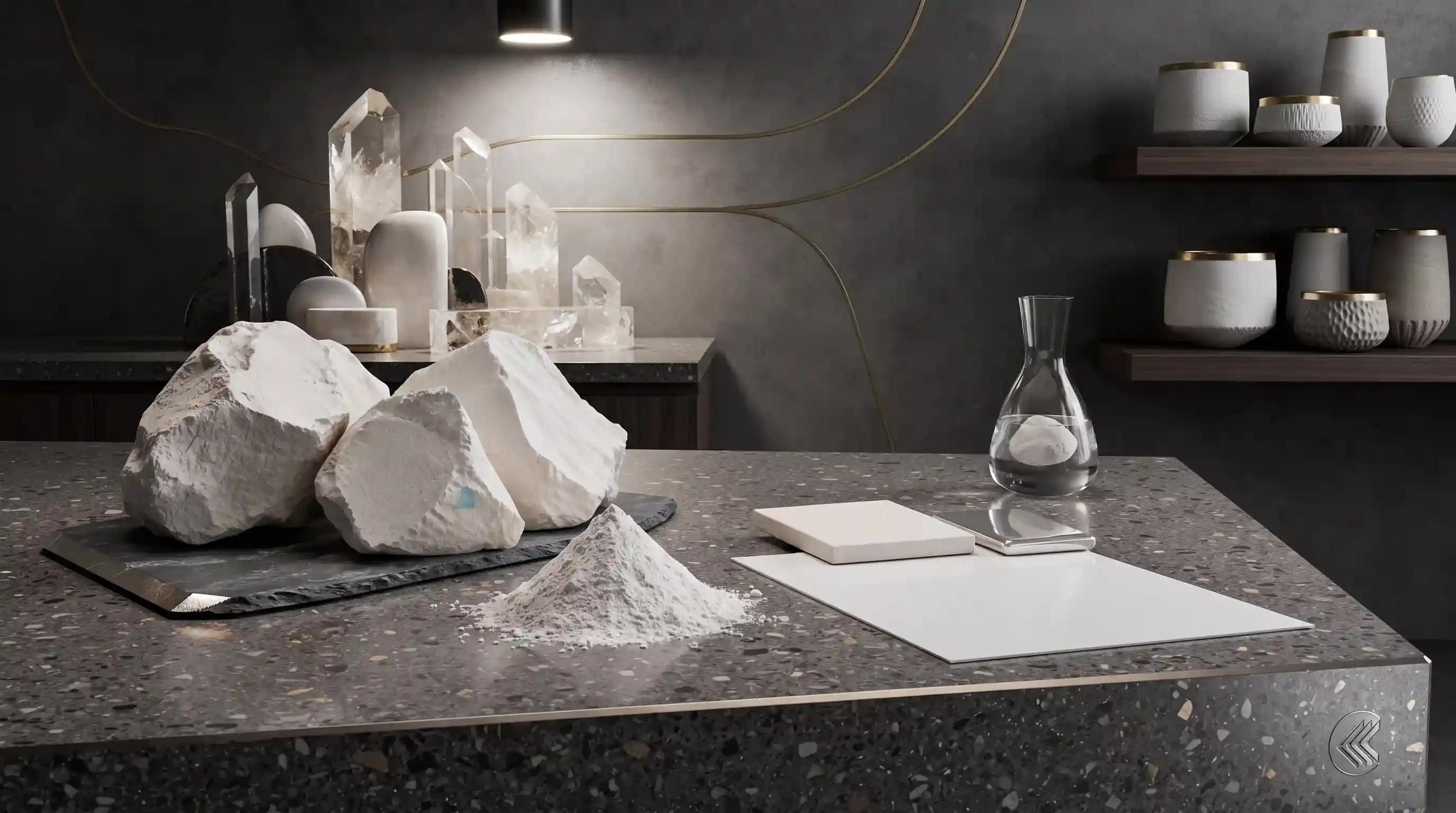
تعد صناعة الورق واحدة من أکبر مستهلکی الکاولین فی العالم. فی هذه الصناعة، للکاولین تطبیقان رئیسیان: کـ حشو (Filler) داخل ألیاف الورق وکـ طلاء (Coating) على سطح الورق. یساعد کلا التطبیقین فی خفض تکالیف الإنتاج وتحسین جودة المنتج النهائی، ولهذا السبب یعتبر الکاولین مادة استراتیجیة لمصانع الورق.
الکاولین کحشو
الألیاف السلیلوزیة هی المادة الخام الرئیسیة للورق، لکن هذه الألیاف باهظة الثمن وموارد الغابات لتوفیرها محدودة. یعمل الکاولین کحشو معدنی، حیث یستقر بین الألیاف ویزید من حجم الورق دون الحاجة إلى استخدام المزید من الألیاف. هذا یعنی أنه بإضافة الکاولین، یمکن إنتاج ورق بوزن وحجم مماثلین، بینما ینخفض استهلاک الألیاف باهظة الثمن. هذه واحدة من أکثر طرق خفض التکلفة فعالیة ومعروفة فی صناعة الورق فی جمیع أنحاء العالم.
الکاولین کطلاء (Coating)
على سطح الورق عالی الجودة مثل ورق المجلات، وورق الطباعة والکتابة، وورق التعبئة والتغلیف، یتم سحب طبقة طلاء من الکاولین. تخلق هذه الطبقة سطحاً أملساً ومشرقاً ومناسباً للطباعة. یعد الکاولین ذو الدقائق الدقیقة (عادة 800 شبکة فما فوق) الخیار الأفضل لهذا التطبیق، لأنه یصنع سطحاً أملساً وموتماماً تماماً یستقبل حبر الطباعة بشکل جید.
مزایا استخدام الکاولین فی صناعة الورق
- إشراق الورق أکثر: یزید الکاولین من بیاض الورق وتألقه، وهو أمر ذو أهمیة عالیة للطباعة عالیة الجودة.
- سطح أکثر سلاسة: یخلق طلاء الکاولین سطحاً موحداً للطباعة الدقیقة.
- التحکم فی المسامیة: ینظم الکاولین مسامیة الورق ویحسن أداء الحبر على السطح.
- تقلیل استهلاک الألیاف: توفیر کبیر فی تکلفة المواد الخام السلیلوزیة.
- زیادة سرعة الإنتاج: یساعد الکاولین على تجفیف عجینة الورق بشکل أسرع ویزید من سرعة الآلة.
تقلیل التکالیف وزیادة الکفاءة
باختصار، یعد استخدام الکاولین فی صناعة الورق معادلة مربحة: حیث تنخفض تکلفة المواد الخام، وتزداد سرعة آلة الإنتاج، وتتحسین جودة المنتج النهائی. بالنسبة لمصانع الورق، فإن اختیار الکاولین ذو التوزیع المناسب للجسیمات واللون الأبیض العالی یعد قراراً استراتیجیاً یؤثر بشکل مباشر على ربحیتها ویحافظ على میزتها التنافسیة فی السوق.
من المثیر للاهتمام معرفة أن الورق عالی الجودة یمکن أن یتکون من الکاولین بنسبة تصل إلى حوالی 30% من وزنه؛ وهذا الرقم یوضح جیدا أهمیة هذه المادة المعدنیة فی صناعة الورق وهو السبب وراء استحالة تقریباً تقلیل التکالیف فی هذه الصناعة بدون الکاولین.
تعد صناعة الطلاء مستهلکاً هاماً آخر للکاولین. فی إنتاج الدهانات المعماریة والصناعیة وحتى الدهانات الفنیة، یُستخدم الکاولین کحشو معدنی وکَمادة أساسیة. نظراً للون الأبیض، والتوزیع المناسب للجسیمات، والسلوک الریولوجی الملائم، والسعر الاقتصادی، تحتل هذه المادة مکانة خاصة فی ترکیبات الطلاء.
لماذا یُستخدم الکاولین فی الطلاء؟
یتکون الطلاء من ثلاثة أجزاء رئیسیة: الصباغ (Pigment)، والمادة الماصة أو الراتنج (Binder)، والمذیب (Solvent). یُستخدم الکاولین کحشو رخیص الثمن لیحل محل جزء من الأصباغ باهظة الثمن مثل ثانی أکسید التیتانیوم (TiO₂). یُعتبر هذا الاستبدال أحد أکثر الطرق فعالیة لتقلیل التکالیف فی صناعة الطلاء، حیث یُعد ثانی أکسید التیتانیوم أحد أغلى المواد الخام فی ترکیبات الطلاء ویستحوذ على حصة کبیرة من التکلفة الإجمالیة.
المزایا الفنیة للکاولین فی الطلاء
- تغطیة أفضل: تساعد جزیئات الکاولین على انتشار الضوء وتزید من قوة تغطیة الطلاء.
- استقرار اللزوجة: یساعد الکاولین فی التحکم فی ترکیز وقوام الطلاء ویجعله جاهزاً للاستخدام.
- منع الترسیب: یمنع الکاولین الأصباغ من الاستقرار فی العلبة بمرور الوقت.
- زیادة المتانة: یتمتع غشاء الطلاء المحتوی على الکاولین بمقاومة أکبر للتآکل والرطوبة.
- بیاض عالٍ: مثالی للألوان الفاتحة والبیضاء ویساهم فی لمعان الطلاء.
تقلیل التکالیف دون المساومة على الجودة
تعد إحدى أکبر التحدیات التی تواجه مصنعی الدهانات هی الحفاظ على جودة المنتج مع تقلیل التکالیف فی نفس الوقت. یحل الکاولین هذا التحدی بدقة: استبدال جزء من ثانی أکسید التیتانیوم بالکاولین عالی الجودة یمکن أن یقلل بشکل کبیر من تکالیف الإنتاج، بینما تظل جودة الطلاء ثابتة تقریبًا. تمکن العدید من مصنعی الدهانات، من خلال تحسین الترکیبات واستخدام الکاولین المناسب، من البقاء فی السوق التنافسیة والحفاظ على هوامش ربحهم.
اختیار الدرجة المناسبة للطلاء
بالنسبة لصناعة الطلاء، یُستخدم عادةً الکاولین بدرجة 800 إلى 1200 شبکة (mesh). توفر الجسیمات بهذا الحجم تغطیة جیدة وتختلط وتنتشر بسهولة أثناء عملیة إنتاج الطلاء. یُعد الکاولین عالی النقاء واللون الأبیض الساطع الخیار الأفضل لهذه الصناعة، حیث أن أی شوائب یمکن أن تؤثر على اللون النهائی للمنتج.
فی النهایة، فإن الطلاء المصنوع من الکاولین عالی الجودة یؤدی بشکل أفضل، ویکون أکثر متانة، ویجلب عمیلاً أکثر رضا؛ وکل هذا یعنی تقلیل التکالیف الخفیة مثل المرتجعات، وشکاوى العملاء، وتکالیف الإعلانات المتکررة، والتی تؤثر على ربحیة المصنع على المدى الطویل.
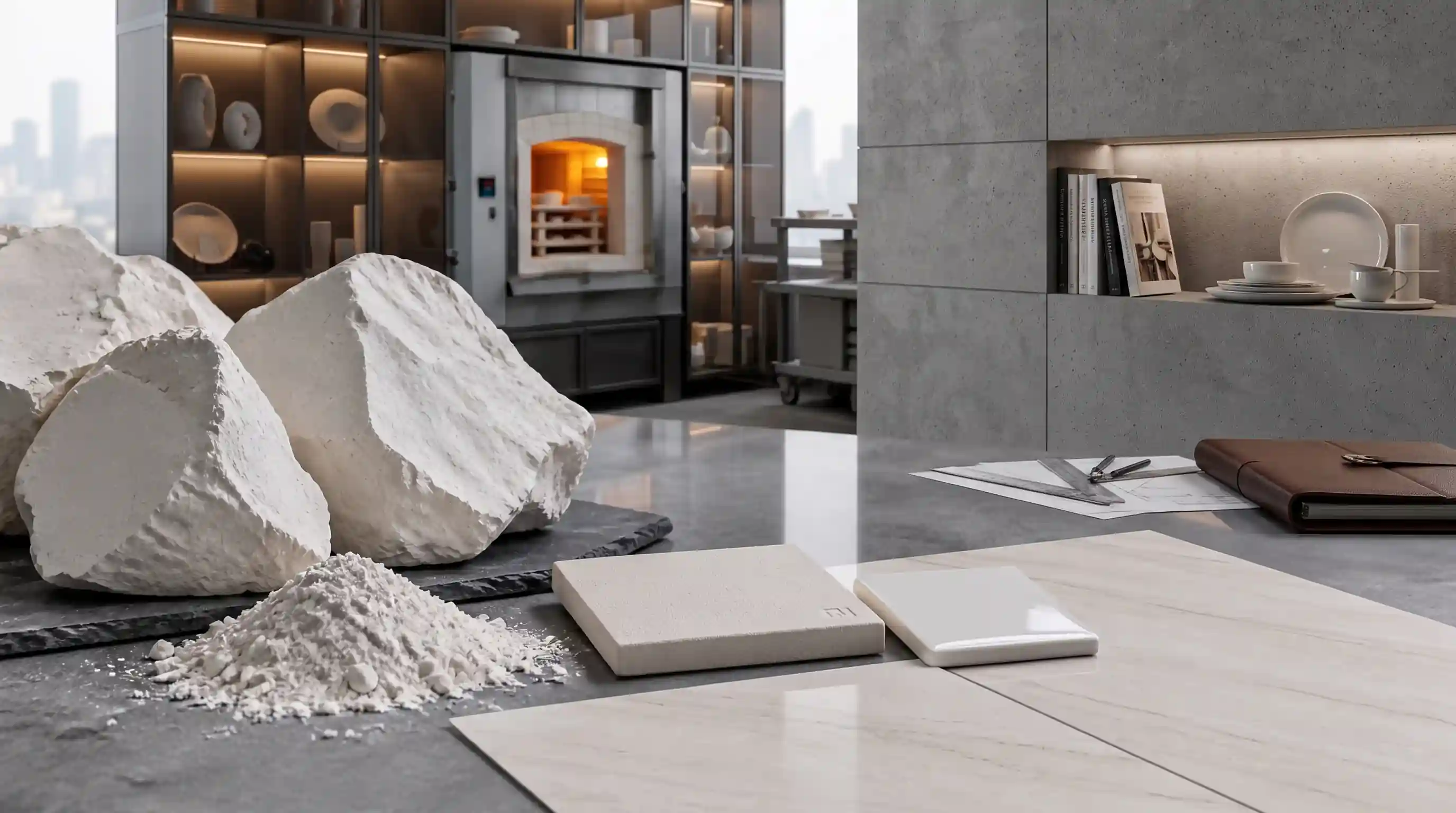
حتى الآن، رأینا کیف یساهم الکاولین فی خفض التکالیف بطریقة خاصة فی کل صناعة. ولکن فی هذا الفصل، نود دراسة هذا الموضوع من منظور أکثر عمومیة واستراتیجیة: الحلول العامة لخفض التکالیف فی الصناعات المعدنیة باستخدام المعادن الاقتصادیة مثل الکاولین.
١. استبدال المواد باهظة الثمن
الطریقة الأبسط والأکثر فعالیة لخفض التکالیف هی استبدال المواد الباهظة بمواد أرخص ذات أداء مماثل. یمکن أن یحل الکاولین محل جزء من التلک، والفلسبار، وثانی أکسید التیتانیوم، وحتى بعض الأصباغ. تُستخدم هذه الاستراتیجیة على نطاق واسع فی صناعات السیرامیک، والطلاء، والورق، وتؤدی إلى نتائج مالیة ملموسة.
٢. تقلیل استهلاک الطاقة
فی الصناعات التی تتطلب حرق المنتجات (مثل السیرامیک والبلاط)، تُعد الطاقة واحدة من أکبر أجزاء تکلفة الإنتاج. یمکن أن یساهم الکاولین فی تحقیق وفورات کبیرة فی استهلاک الغاز والکهرباء من خلال خفض درجات حرارة الحرق وتقصیر دورة الأفران. توفیر الطاقة لا یقلل التکالیف فحسب، بل یقلل أیضاً من الآثار البیئیة للصناعات.
٣. تقلیل النفایات الإنتاجیة
النفایات هی تکلفة تُقتطع مباشرة من أرباح المصنع. یقلل الکاولین من أخطاء الإنتاج ویجعل المنتج النهائی أکثر استقراراً بفضل توزع جزیئاته الموحد ونقاوته العالیة. تقلیل النفایات یعنی الاستخدام الأمثل للمواد، والید العاملة، والطاقة، وزیادة الکفاءة العامة لخط الإنتاج.
٤. تحسین العملیات وسرعة الإنتاج
یعمل الکاولین على رفع سرعة واستقرار خط الإنتاج من خلال تحسین ریولوجیا المعاجین (فی الطلاء والطلاء الزجاجی) وتحسین إزالة الماء (فی صناعة الورق). خط الإنتاج الأسرع والأکثر استقراراً یقلل من التکلفة العامة لکل وحدة منتج ویزید من عائد الاستثمار فی الآلات.
٥. التوفیر فی سلسلة الإمداد
إن توفیر الکاولین من منتج محلی موثوق یقلل من تکالیف النقل، والجمارک، والتأخیرات، وتقلبات العملة. یمکن لمشروع أمیران للمعادن والأحجار، من خلال إنتاج الکاولین فی نطاق شبکی من 450 إلى 1500 مش، أن یکون مورداً مستقراً وموثوقاً لمختلف الصناعات ویضمن أمن سلسلة الإمداد للمصانع.
بالطبع، الکاولین لیس المعدن الاقتصادی الوحید فی الصناعات؛ فمعادن أخرى مثل الدولومایت تلعب أیضاً دوراً هاماً فی خفض التکالیف وتحسین استقرار الصناعات. لمزید من القراءة، یمکنک قراءة مقالة تأثیر الدولومایت على خفض تکالیف الإنتاج فی الصناعات المعدنیة وأیضاً دور الدولومایت فی تقلیل الآثار البیئیة للصناعات للحصول على رؤیة أکثر شمولاً حول دور المعادن فی الصناعة.
فی هذه المقالة، استعرضنا دور الکاولین فی خفض تکالیف الإنتاج فی الصناعات المعدنیة. من البلاط والسیرامیک إلى الطلاء الزجاجی، والورق، والألوان، یمکن لهذا المعدن الأبیض متعدد الاستخدامات -أینما تواجد- أن یرتقی بجودة المنتج ویقلل التکالیف. هذان الإنجازان هما بالضبط ما تسعى إلیه أی مصنع.
ملخص النقاط الرئیسیة
- الکاولین معدن وفیر واقتصادی یمکنه أن یحل محل المواد باهظة الثمن.
- اختیار الدرجة المناسبة (من 450 إلى 1500 مش) لکل صناعة هو قرار فنی واقتصادی.
- یساهم الکاولین فی توفیر الطاقة والوقت من خلال خفض حرارة الحرق، وتقلیل النفایات، وتحسین العملیة.
- فی صناعات الورق والألوان، یُعد الکاولین بدیلاً فعالاً للألیاف باهظة الثمن والأصباغ المکلفة.
- توفیر الکاولین من مصدر موثوق یضمن استقرار الجودة والسعر بمرور الوقت.
کیف نختار الدرجة المناسبة؟
یعتمد اختیار درجة الکاولین المناسبة على عوامل مختلفة: نوع الصناعة، وعملیة الإنتاج، والجودة المطلوبة، والمیزانیة. کقاعدة عامة، بالنسبة للتطبیقات الخشنة مثل هیاکل البلاط، تکون الدرجات ذات 450 مش أکثر ملاءمة، بینما للطلاء الزجاجی والتشطیب الدقیق، تحقق الدرجات من 1200 إلى 1500 مش أداءً أفضل. استشارة منتج موثوق یمتلک مجموعة منتجات کاملة هی الطریقة الأفضل لضمان الاختیار الصحیح.
لماذا کاولین مشروع أمیران للمعادن والأحجار؟
یقوم مشروع أمیران للمعادن والأحجار، بخبرته فی إنتاج المعادن، بإنتاج وعرض الکاولین الخاص به فی نطاق 450 إلى 1500 مش لتطبیقات متنوعة (البلاط، والسیرامیک، والطلاء الزجاجی، والورق، والألوان). یتیح هذا التنوع للمصانع اختیار الدرجة التی تحتاجها بدقة. إذا کنت تبحث عن کاولین عالی الجودة، یمکنک زیارة صفحة منتج کاولین مشروع أمیران للمعادن والأحجار والتواصل مع خبرائنا.
مستقبل الکاولین فی الصناعات المعدنیة
فی ظل نمو السکان، وتطور صناعات البناء، والزیادة المستمرة فی الطلب على الورق والطلاء، یبدو مستقبل الکاولین مشرقاً. إن المصانع التی تستثمر الیوم فی المعادن الاقتصادیة وعالیة الجودة ستکون هی الرابحة فی السوق التنافسیة غداً. الکاولین لیس مجرد مادة خام فحسب، بل یُعد استراتیجیة لخفض التکالیف وزیادة الجودة.
نأمل أن یکون هذا المقال قد ساعدک فی فهم دور الکاولین بشکل أفضل فی الصناعات المعدنیة. إذا کان لدیک أی استفسار، أو تحتاج إلى استشارة فنیة، أو طلب عینات، فإن خبراء مشروع أمیران للمعادن الصخریة على أتم الاستعداد للإجابة والتعاون معک.
| سؤال | إجابة |
|---|---|
| ما هو الکاولین؟ | الکاولین أو الصلصال الصینی هو معدن طینی أبیض اللون له الصیغة Al₂Si₂O₅(OH)₄ ویستخدم على نطاق واسع فی صناعات البلاط، السیرامیک، التزجیج، الورق، والطلاء. |
| ما هو نطاق شبکة (Mesh) کاولین مشروع أمیران للمعادن الصخریة؟ | یتم إنتاج وتورید کاولین هذا المشروع بنطاق شبکة یتراوح بین 450 إلى 1500 مش. |
| کیف یقلل الکاولین من تکالیف الإنتاج؟ | من خلال استبدال المواد باهظة الثمن، خفض درجة حرارة الحرق، تقلیل الهدر، وتحسین کفاءة عملیة الإنتاج. |
| ما هی درجة الکاولین المناسبة للبلاط والسیرامیک؟ | عادةً ما تکون درجة 450 مش مناسبة لهیکل البلاط ومنتجات السیرامیک. |
| ما هی درجة الکاولین المناسبة للتزجیج؟ | للتزجیج، تُستخدم عادةً الدرجات الدقیقة من 1200 إلى 1500 مش. |
| ما هو دور الکاولین فی صناعة الورق؟ | یُستخدم الکاولین کمادة مالئة داخل الألیاف وکطلاء على سطح الورق، مما یقلل من استهلاک الألیاف بااهظة الثمن. |
| هل یُستخدم الکاولین فی صناعة الطلاء؟ | نعم، یُستخدم الکاولین کمادة مالئة وکسرء لجزء من ثنائی أکسید التیتانیوم فی الطلاء. |
| ما الفرق بین الکاولین والصلصال الصینی؟ | لا یوجد فرق؛ فالصلصال الصینی هو اسم آخر للکاولین مأخوذ من اسم منطقة کاولینغ فی الصین. |
| لماذا بیاض الکاولین مهم؟ | البیاض العالی یجعل المنتج النهائی أکثر إشراقاً ویمنح جودة مظهریة أفضل فی الورق، الطلاء، البلاط، والتزجیج. |
| کیف نشتری کاولین عالی الجودة؟ | اشترِ من مُصنِّع موثوق مثل مشروع أمیران للمعادن الصخریة والذی یقدم نطاق شبکة من 450 إلى 1500 مش بتوزیع منتظم. |
تم إعداد هذا المقال بالاعتماد على البیانات الفنیة ومواصفات منتج الکاولین (نطاق شبکة 450 إلى 1500 مش) على موقع مشروع أمیران للمعادن الصخریة (https://ksamiran.ir)
Comparison of Limonite Oxide (Gol Mash) Types in the Iranian Market
Comparison of Limonite Oxide (Gol Mash) Types in the Iranian Market

Introduction to Limonite Oxide (Gol Mash) and Its Importance in Industry
Limonite oxide (Gol Mash) mineral is considered one of the most widely used mineral pigments in various Iranian industries, holding a special place due to its unique physical and chemical characteristics. Known as a natural pigment with color spectrums ranging from yellow to brown, this substance offers numerous applications in coating industries, paint manufacturing, and construction materials. The Amiran Rock Mineral Project, as an active manufacturer in this field, processes and supplies this high-quality mineral.
In the Iranian market, understanding the different types of limonite oxide (Gol Mash) helps various industries choose the best option tailored to their technical needs. Precise processing of limonite ores requires advanced equipment to produce powder with standard specifications. The variety in granulation and mesh size of this material has significantly expanded its range of applications, making it a key component in the formulation of modern products.
To better understand this product's position in the domestic market, we suggest reading the market review of limonite oxide (Gol Mash) sales in Iran to become more familiar with trade trends and demand levels. The high processing quality of this mineral pigment has prompted construction and coating industries to pay special attention to it.
The correct selection of this mineral substance has a direct impact on the final quality of manufactured products. Therefore, a careful examination of its properties, granulation, and supply methods is of high importance. In the continuation of this article, we will take a closer look at the various dimensions of this industrial product and its diverse applications.
Technical Specifications and Mesh Range of Limonite Oxide (Gol Mash)
The technical specifications of limonite oxide (Gol Mash) play a decisive role in its efficiency across various industries. One of the most important parameters in categorizing this material is its mesh range, which determines the quality of the resulting powder. The standard mesh range for this product is between 450 and 1500 mesh, indicating high precision in grinding and micronizing the raw ore.
Powders with higher meshes (such as 1500 mesh) have much finer particles used for sensitive applications in coating and pigment industries, while lower meshes (such as 450 mesh) may be used in higher volumes of construction materials. To learn more about the technical details and how to supply these products via the official page, you can visit the Limonite Oxide (Gol Mash) page and view its complete specifications.
The variety in mesh sizes allows engineers and formulators to produce mineral coatings and pigments with different mechanical and appearance properties. The particle size distribution within the 450–1500 mesh range improves the final product's coverage and stability.
Strict quality control during the production process by the Amiran Rock Mineral Project guarantees the purity and uniformity of the powder across all batches. This ensures that dependent industries do not have to worry about fluctuations in raw material quality.
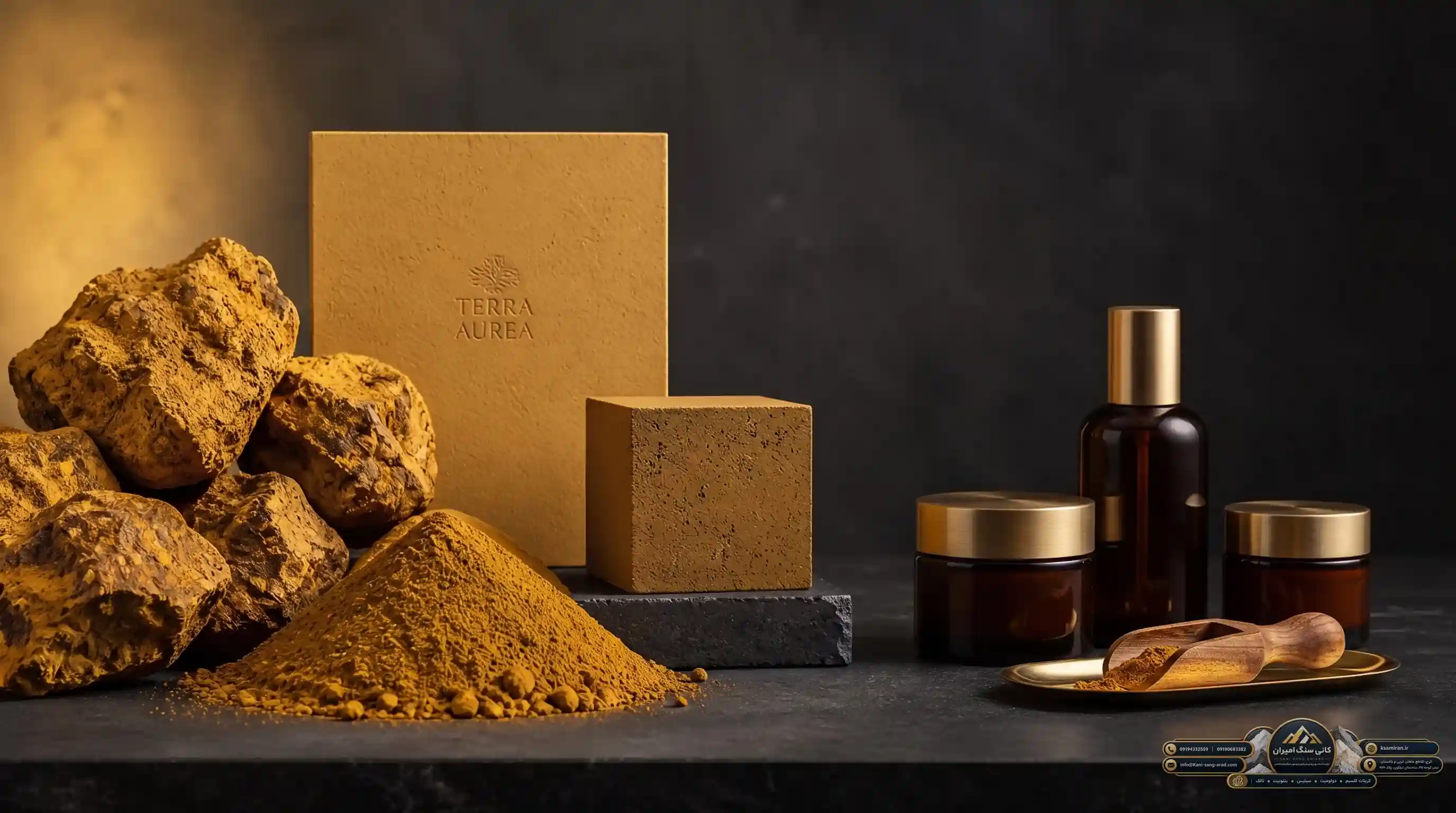
Main Applications of Limonite Oxide (Gol Mash) in Construction and Coating Industries
The main applications of limonite oxide (Gol Mash) include its use in mineral pigments, coatings, and construction products. As a pigment resistant to weathering factors and sunlight, this material has widespread use in the construction industry. Adding this pigment to concrete, colored cement, bricks, and mosaic tiles creates a beautiful and lasting appearance.
In the field of coatings, this material acts as a mineral additive that, in addition to creating an attractive yellow and earthy color, helps improve the protective properties of the coating layer. The chemical stability of limonite oxide against various environmental conditions makes it an ideal choice for construction industries.
Also, to stay informed about economic conditions and rate fluctuations of this material in the market, reading the article daily price analysis of limonite oxide (Gol Mash) in the market provides valuable information for industrial operators.
Construction material manufacturers have been able to elevate the quality of their products to higher standards by utilizing this mineral pigment. High durability and color stability are among the most important advantages of using this material in structures.
The Role of Limonite Oxide (Gol Mash) in the Production of Mineral Pigments
Mineral pigments form an important part of the paint, resin, and coating industries, and limonite oxide (Gol Mash) is recognized as one of the main pillars in this field. Due to its non-toxicity, excellent light stability, and compatibility with various resins and solvents, this natural pigment is highly sought after by formulators.
Using the appropriate mesh range (450–1500 mesh) in the production of these pigments ensures that tinting strength and hiding power reach their maximum levels. The micronized particles of this material disperse well within different matrices and prevent particle agglomeration.
For further reading on more specialized applications of this mineral, the article application of limonite oxide (Gol Mash) in the glassmaking industry reveals new dimensions of this product's applications.
Processing quality at Amiran Rock Mineral guarantees that the produced mineral pigments contain minimal impurities and create a uniform final color in industrial products.
Review of Production and Processing Methods for Limonite Oxide (Gol Mash)
The production process of limonite oxide (Gol Mash) includes stages of ore extraction from mines, primary crushing, milling, and micronization to reach the desired mesh range of 450 to 1500 mesh. This process requires high technical knowledge and modern granulation equipment.
By utilizing advanced production lines, the Amiran Rock Mineral Project strives to supply a homogeneous and high-quality powder to the market. Particle size control during these stages is of particular importance as it directly affects the final properties of the pigment and coating.
Throughout the processing procedure, dehumidification and impurity separation are also performed to bring the purity of limonite oxide to its highest possible level. This attention to technical details has made this product popular in sensitive industries.
Compliance with manufacturing standards at all stages has enabled this mineral to secure a firm foothold in domestic markets and best meet the needs of various industries.
Competitive Advantages and Quality Features of Iranian Limonite Oxide (Gol Mash)
Limonite oxide (Gol Mash) produced in Iran possesses numerous competitive advantages compared to similar foreign samples. Access to rich domestic mines has reduced finished costs and facilitated industries' access to this mineral.
The quality features of this product include high hiding power, UV resistance, appropriate thermal resistance, and compatibility with various construction and coating systems. The 450–1500 mesh range allows for product customization based on the consumer's exact requirements.
By continuously supplying this high-quality product, the Amiran Rock Mineral Project has managed to satisfy major consumers and offer high quality standards in the Iranian market.
These competitive advantages have enabled the country's manufacturing industries to source high-quality raw materials at competitive prices without relying on imports, thereby upgrading the quality of their final products.
Guide to Purchasing and Selecting the Right Limonite Oxide (Gol Mash)
To purchase high-quality limonite oxide (Gol Mash), paying attention to several technical and commercial parameters is essential. First and foremost, determining the final application (such as mineral pigments, coatings, or construction products) will dictate the required mesh (450–1500 mesh).
Buyers must pay attention to the purity level, granulation uniformity, and absence of mechanical impurities in the powder. Communicating with reputable manufacturers like the Amiran Rock Mineral Project provides greater assurance regarding product authenticity and quality.
Reviewing price fluctuations and market analysis also greatly helps in optimizing procurement costs. Consulting with technical experts before placing an order will lead to a more precise selection.
Ultimately, purchasing directly from a reputable manufacturer guarantees receiving a product with precise technical specifications and a reasonable price for industrial production lines.
Market Outlook and Future Applications of Limonite Oxide (Gol Mash)
The market outlook for limonite oxide (Gol Mash) in Iran is assessed as very bright given the growth of construction and coating industries. Demand for eco-friendly mineral pigments is increasing day by day.
With the development of processing technologies and the achievement of finer meshes up to 1500 mesh, the applications of this material will expand into more advanced industries as well. By monitoring market needs, the Amiran Rock Mineral Project continues to supply high-grade minerals in sync with these developments.
Investing in research and development and improving micronization methods can create greater added value for this mineral and make its role in the country's industrial economy more prominent.
Overall, as a strategic raw material, limonite oxide will continue to maintain its position as one of the most widely used mineral pigments in the Iranian market.
| Question | Answer |
|---|---|
| What is limonite oxide (Gol Mash)? | It is a natural mineral pigment with a yellow to brown color spectrum used in coating and construction industries. |
| What is the mesh range of limonite oxide (Gol Mash)? | This product is produced and supplied in a mesh range of 450 to 1500 mesh. |
| What are the main applications of this mineral? | Mineral pigments, various coatings, and construction products are among its main applications. |
| Who is the manufacturer of this product in Iran? | The Amiran Rock Mineral Project is the manufacturer and supplier of these minerals. |
| Is this product resistant to light and heat? | Yes, limonite pigments possess suitable light and thermal stability across various industries. |
| How can the daily price of this product be checked? | It can be examined through specialized market articles and by contacting the sales department of Amiran Rock Mineral. |
| Do higher meshes have better tinting strength? | Yes, meshes close to 1500 mesh have finer particles, providing better coverage and uniformity. |
| Is this material also used in the glassmaking industry? | Yes, besides construction and coatings, it is used in certain specialized industries such as glassmaking. |
| How can one choose the best mesh for their application? | The appropriate mesh is chosen based on technical requirements and the formulation type of the final product (construction or paint). |
| How can the official product page be viewed? | It can be viewed by visiting the link to the limonite oxide (Gol Mash) page on the Amiran Rock Mineral website. |
Specialized reference for industrial minerals and ore processing, Amiran Rock Mineral.